Best Cleanser for Fungal Acne: Daily Wash vs Antifungal Treatment
Finding the best cleanser for fungal acne is confusing because search results often mix two very different products: an everyday face wash and an antifungal treatment. One is meant to remove sweat, oil, sunscreen, and debris. The other is meant to target Malassezia when Malassezia folliculitis has actually been diagnosed.
The short answer is that the best cleanser for fungal acne for daily use is usually a gentle cleanser that does not unnecessarily strip or irritate the skin. But a regular cleanser does not automatically treat Malassezia folliculitis. When the condition is truly present, treatment centers on antifungal therapy rather than on finding a cosmetic cleanser that passes an online “fungal-acne-safe” ingredient checker.
Table of Contents
Best Cleanser for Fungal Acne: Start by Confirming What You’re Treating
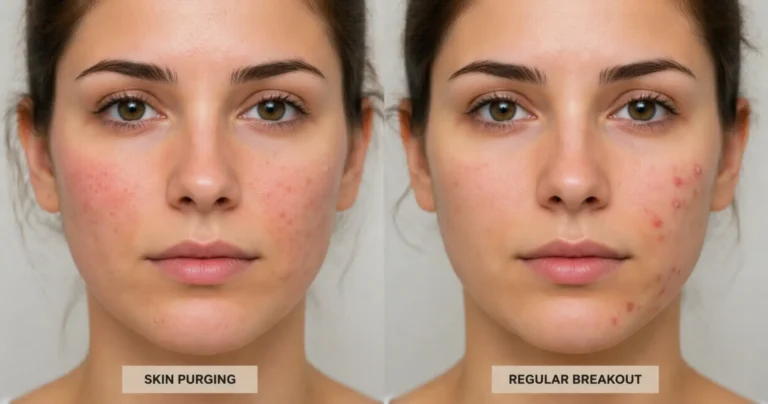
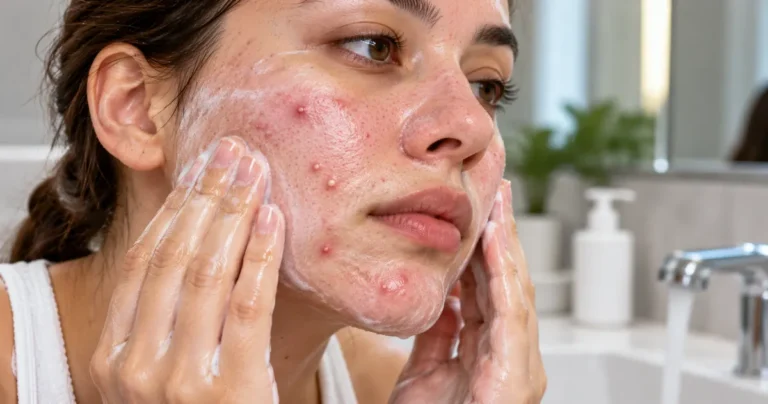
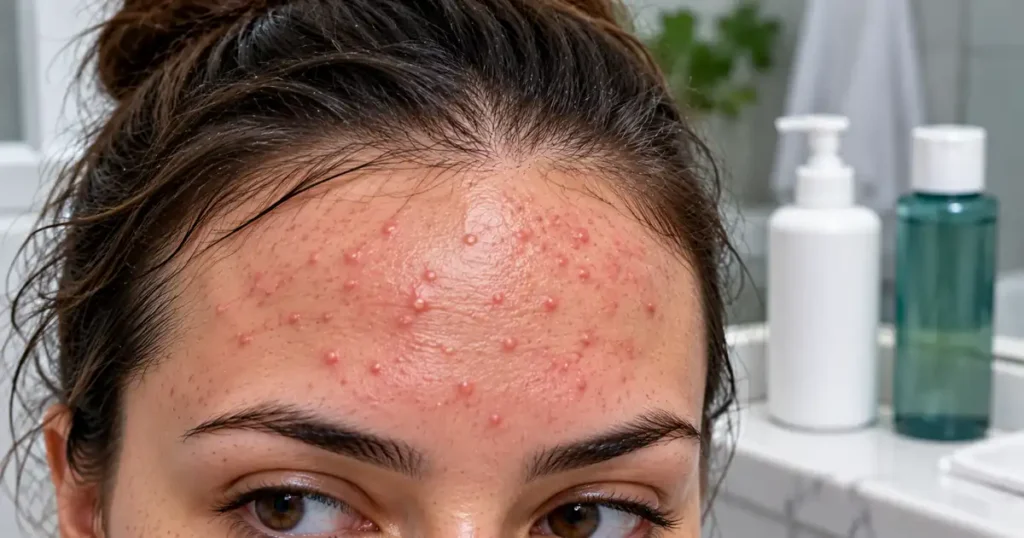
“Fungal acne” is the popular name for Malassezia folliculitis. Despite the nickname, it is not acne vulgaris. It is an inflammatory follicular condition involving Malassezia yeast, and it can resemble ordinary acne closely enough to be mistaken for it.
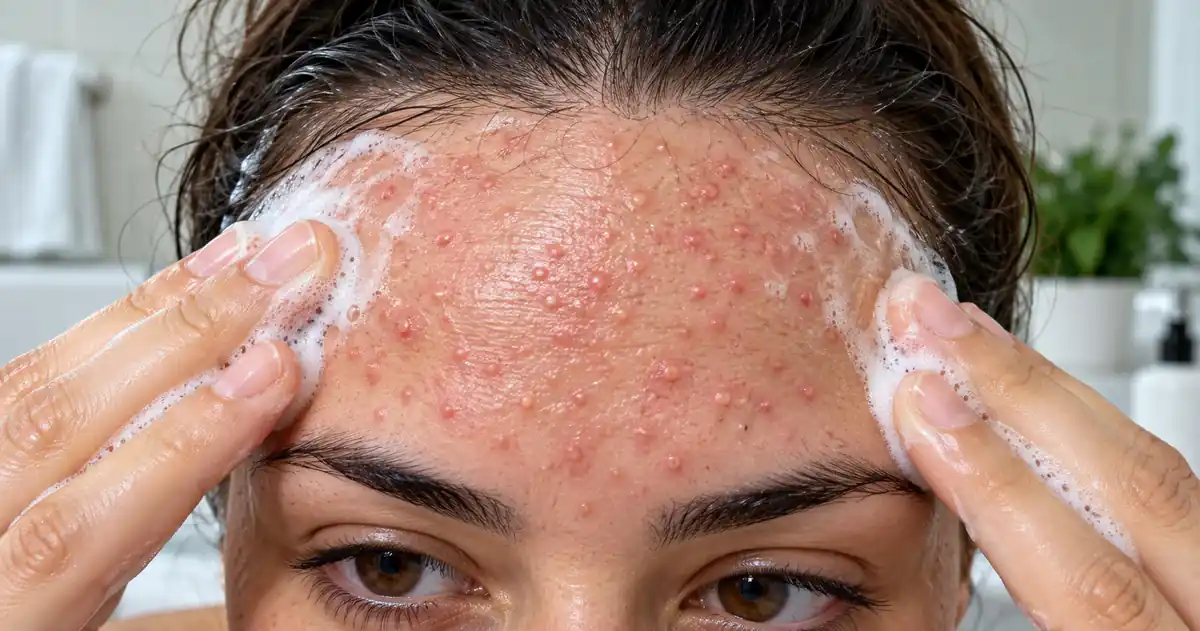
Typical clues can include clusters of small, similar-looking papules or pustules, often with itching. The forehead, hairline, chest, shoulders, and upper back are common sites. Unlike acne vulgaris, classic comedones such as blackheads are less characteristic. Still, appearance alone cannot confirm the diagnosis.
That distinction matters before you buy the best cleanser for fungal acne because acne vulgaris and Malassezia folliculitis require different treatment strategies. They can also occur together. A 2026 review warned that increased social-media attention has contributed to people applying antifungals without a confirmed diagnosis, while the condition itself can be confused with acne and other follicular eruptions.
If your main clue is an itchy crop of small, uniform bumps, see our guide to when itchy acne-like bumps may actually be fungal before assuming a product list can diagnose the problem.
Best Cleanser for Fungal Acne for Daily Washing
A daily cleanser has a simple job: remove sweat, surface oil, dirt, sunscreen, makeup, and ordinary residue without making the skin unnecessarily irritated. It does not need to be an antifungal medication to be useful during treatment.
That makes gentleness especially important if your skin is already dry from medicated products. A cleanser that leaves the face burning, tight, or increasingly flaky may make the routine harder to tolerate even if it is marketed for acne.
One practical example is Vanicream Gentle Facial Cleanser. Vanicream currently describes it as a soap-free, pH-balanced, non-comedogenic, sulfate-free cleanser formulated for sensitive skin. The manufacturer also states that it contains no botanical extracts or essential oils and is free of fragrance.
Vanicream is being selected here as a gentle daily cleanser, not because it has been proven to treat Malassezia folliculitis.
As an Amazon Associate, we earn from qualifying purchases.
Need a simple cleanser while your actual treatment does the heavy lifting? 💧
Vanicream Gentle Facial Cleanser is a practical daily option when sensitive or treatment-dried skin does not need another aggressive active.
✅ Soap-free and pH-balanced
✅ Fragrance-free and sulfate-free
✅ Non-comedogenic and formulated for sensitive skin
This cleanser is for routine cleansing. It is not an antifungal treatment for Malassezia folliculitis.
👉 Check the latest price on Amazon
Does a “Fungal Acne Safe” Cleanser Treat Fungal Acne?
No. A cleanser described online as “fungal-acne-safe” is not automatically a treatment for Malassezia folliculitis.
The phrase is widely used by skincare communities and ingredient-checker websites, but clinical diagnosis and treatment guidance do not depend on a universal cosmetic ingredient whitelist. Current medical reviews focus instead on recognizing the clinical pattern, confirming the diagnosis when needed, addressing predisposing factors, and using antifungal therapy.
That does not make ingredient lists useless. If one cleanser repeatedly seems to coincide with irritation or worsening bumps, reviewing its formula can be reasonable. The problem is treating an ingredient-checker score as proof that a cleanser will prevent, cause, or cure Malassezia folliculitis.
When choosing the best cleanser for fungal acne, use ingredient screening as a secondary troubleshooting tool. First ask whether the product is a normal cleanser or an actual antifungal drug, whether it suits your skin type, whether it contains ingredients that irritate you personally, and whether the diagnosis itself makes sense.
Best Cleanser for Fungal Acne vs Antifungal Treatment
A daily cleanser and an antifungal treatment solve different problems.
| Feature | Gentle daily cleanser | Antifungal treatment |
|---|---|---|
| Main role | Removes sweat, oil, makeup, sunscreen, and debris | Targets Malassezia when treatment is appropriate |
| Example | Vanicream Gentle Facial Cleanser | Ketoconazole or selenium sulfide treatment |
| Treats confirmed Malassezia folliculitis? | Not established | Antifungal agents are used clinically |
| Routine use | Often suitable depending on skin tolerance | Depends on the specific drug, label, diagnosis, and medical guidance |
| Main trade-off | May not treat the underlying yeast problem | Can cause dryness, irritation, or other adverse effects |
This distinction is the core of choosing the best cleanser for fungal acne. A person can use a gentle cleanser because it makes the skin comfortable while separately using an antifungal treatment according to a drug label or clinician’s instructions.
DermNet lists topical ketoconazole, selenium sulfide shampoo, and econazole among treatments used for Malassezia folliculitis. Cleveland Clinic likewise describes topical antifungal creams or shampoos and, for some patients, oral antifungal medication.
What Antifungal Washes Are Used for Malassezia Folliculitis?
Topical antifungal treatments may include ketoconazole, selenium sulfide, or other azole antifungals depending on the diagnosis, body area, severity, and clinician’s plan. More persistent or extensive disease may sometimes require systemic therapy.
This is where online cleanser advice can become unsafe. A shampoo that contains an antifungal active is not automatically labeled for use on every body site or appropriate for every reader.
What About Nizoral A-D?
Nizoral A-D contains ketoconazole 1%. Its current U.S. Drug Facts label, updated March 17, 2026, identifies it as an anti-dandruff shampoo for controlling flaking, scaling, and itching associated with dandruff. The directions are written for the hair and scalp.
That means the OTC label does not tell you to use Nizoral A-D as a routine facial cleanser for suspected fungal acne. Clinicians may use or recommend antifungal products differently depending on the diagnosis and location, but that should not be converted into a universal DIY face-washing schedule.
The label also says to avoid eye contact, not to use it on a broken or inflamed scalp, and to stop and ask a doctor if a rash appears or the condition worsens or fails to improve within the labeled timeframe.
Can Antifungal Shampoo Dry Out Your Face?
Yes. Medicated shampoos can be drying or irritating, especially when facial skin is already sensitive or when a product intended for the scalp is repeatedly used off-label.
Possible problems include tightness, dryness, burning, stinging, redness, or a rash. Those symptoms can become confusing because irritation itself may create new bumps or redness that makes the original condition look worse.
If antifungal shampoo is drying out your face, do not respond by scrubbing harder or stacking several medicated cleansers. The best cleanser for fungal acne during a drying treatment phase may simply be a separate mild daily cleanser that keeps cleansing tolerable while the actual medication is used exactly as directed.
Gentle Cleanser for Dry and Sensitive Fungal Acne-Prone Skin
Dry or reactive skin needs a different buying decision from oily skin that tolerates medicated products easily.
A gentle cleanser for fungal acne prone skin should prioritize basic cleansing and tolerability. Useful features can include a mild surfactant system, fragrance-free formulation if fragrance bothers you, and an absence of unnecessary exfoliating actives when the rest of the routine is already irritating.
Vanicream Gentle Facial Cleanser fits that daily-cleansing role because its current formula is soap-free, pH-balanced, sulfate-free, and designed for sensitive skin. Again, those characteristics make it a reasonable cleanser choice; they do not prove antifungal activity.
Use lukewarm water, wash gently with fingertips, and avoid cleansing brushes or rough scrubs. If your skin is already peeling from treatment, adding a second “acne-fighting” wash may do more to increase irritation than to improve the diagnosis you are actually trying to treat.
What About Salicylic Acid or Benzoyl Peroxide Cleansers?
Salicylic acid and benzoyl peroxide are established acne-vulgaris ingredients, but they are not equivalent to antifungal medication.
The 2026 Malassezia folliculitis review notes that acne vulgaris and Malassezia folliculitis share some pathogenic mechanisms and that acne topicals such as benzoyl peroxide or retinoids may sometimes provide benefit. The review still identifies antifungal medication as the mainstay of treatment.
This distinction matters if you have both acne and folliculitis. A salicylic acid or benzoyl peroxide cleanser may be useful for acne vulgaris, but calling it the best cleanser for fungal acne because it treats acne would blur two separate conditions.
If several products are competing for a place in your routine, it is often better to identify what each one is supposed to treat rather than assume more active ingredients will produce a better result.
How to Check Cleanser Ingredients for Fungal Acne
Ingredient lists can still help you compare cleansers, especially when your skin is sensitive. Use them carefully:
- Verify the current formula. Check the manufacturer rather than relying only on an old retailer listing.
- Identify fragrance or known personal irritants. Sensitivity is individual.
- Check whether the product is cosmetic or medicated. A cleanser and an antifungal drug are not interchangeable.
- Read Drug Facts when the product is an OTC medication. The labeled use, warnings, and directions matter.
- Consider how dry your treatment already makes you. A second aggressive cleanser may be unnecessary.
- Treat “Malassezia-safe” checker results as screening information, not proof. They cannot diagnose folliculitis or guarantee clinical outcomes.
- Change one variable at a time when practical. Otherwise it becomes difficult to know what helped or irritated you.
For more on the environment that favors these eruptions, see our guide to common triggers for Malassezia folliculitis.
Cleansing Routine During Fungal Acne Treatment
A cleansing routine during fungal acne treatment does not need to be complicated.
Morning
If cleansing is needed, use a gentle face wash and lukewarm water. Follow with moisturizer and sunscreen that suit your skin.
Evening
Remove sunscreen or makeup as needed, then cleanse gently. If a healthcare professional has recommended a topical antifungal or medicated wash, use it according to the product label or professional instructions.
Avoid creating a routine where a medicated shampoo, salicylic acid cleanser, benzoyl peroxide wash, scrub, and retinoid all compete for the same irritated skin.
The best cleanser for fungal acne is the one that fills the cleansing role without pretending to replace treatment. In other words, the best cleanser for fungal acne should be judged by cleansing comfort first, not by whether an internet list labels every ingredient “safe.”
The antifungal step should remain a separate, clearly defined part of the plan when it is medically appropriate.
When the Best Cleanser for Fungal Acne Is Not Enough
Changing cleansers is not enough when the diagnosis is uncertain or when the eruption keeps returning despite reasonable care.
Consider professional evaluation if:
- The bumps are persistent, spreading, or very itchy.
- Standard acne treatment repeatedly fails.
- The eruption involves a large area of the chest, back, or shoulders.
- You are immunocompromised.
- You develop significant irritation from self-treatment.
- You are unsure whether the bumps are acne, bacterial folliculitis, Malassezia folliculitis, or something else.
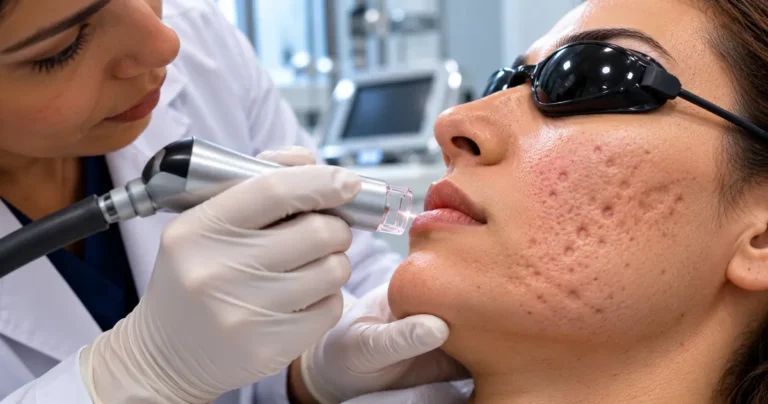
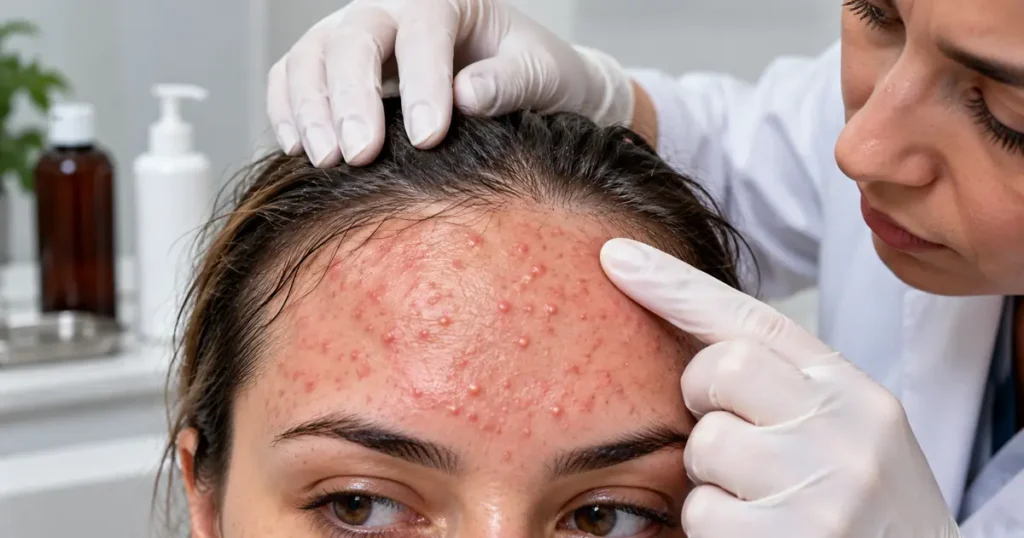
Diagnosis may involve clinical examination and, when necessary, microscopy, histopathology, or other testing. The 2026 review emphasizes that misdiagnosis can delay appropriate treatment, and systematic evidence likewise notes that Malassezia folliculitis is frequently overlooked.
For a broader look at treatment after diagnosis, read our fungal acne treatment options.
Frequently Asked Questions
What is the best cleanser for fungal acne if my skin is sensitive?
The best cleanser for fungal acne for sensitive skin is usually a mild daily cleanser that removes sweat, oil, and residue without adding unnecessary irritation. A fragrance-free, soap-free cleanser such as Vanicream Gentle Facial Cleanser can fill that role, but it does not replace antifungal treatment when Malassezia folliculitis has been confirmed.
Does a fungal-acne-safe cleanser kill Malassezia?
Not necessarily. “Fungal-acne-safe” usually describes a cosmetic screening approach rather than a proven antifungal effect. Unless a product contains an appropriate antifungal drug and is being used for an appropriate indication, you should not assume it kills Malassezia or treats folliculitis.
Is ketoconazole shampoo safe to use as a face wash?
Do not assume that from the bottle. The current U.S. Nizoral A-D label is for dandruff and provides directions for the hair and scalp. Facial use for suspected Malassezia folliculitis is not the labeled OTC use, so ask a healthcare professional before turning a scalp shampoo into a facial treatment routine.
Can I use salicylic acid cleanser during fungal acne treatment?
It may be reasonable for some people who also have acne vulgaris, but salicylic acid is not a substitute for antifungal therapy. Using several drying actives together can also increase irritation, so the decision depends on what you are treating and how your skin tolerates the rest of the routine.
How do I know if I need a gentle cleanser or antifungal treatment?
They are not either-or choices. A gentle cleanser handles routine cleansing, while an antifungal targets Malassezia when treatment is appropriate. If small itchy uniform bumps persist or do not respond to standard acne care, get the diagnosis checked rather than trying to solve the problem only by buying a different cleanser.
Conclusion
The best cleanser for fungal acne is not necessarily the product with the longest “safe ingredients” list or the strongest medicated label. First decide which role you need filled.
For daily washing, a gentle cleanser such as Vanicream Gentle Facial Cleanser can remove sweat, oil, and residue without pretending to treat the yeast. For confirmed Malassezia folliculitis, antifungal treatment is a separate medical step, and the right product, body site, and directions matter.
If the breakout is unusually itchy, uniform, persistent, or resistant to ordinary acne treatment, confirm what you are treating before repeatedly switching cleansers or using antifungal shampoo on your face.
This article is for educational purposes only and is not a diagnosis or a substitute for care from a qualified healthcare professional.
References:
- Draelos ZD, et al. — Malassezia Folliculitis Presentation, Diagnosis, and Treatment: A Review of “Fungal Acne” (Journal of Drugs in Dermatology, 2026)
- DermNet — Malassezia Folliculitis
- Cleveland Clinic — Fungal Acne: Malassezia Folliculitis
- Prindaville B, et al. — Critical Synthesis of Available Data in Malassezia Folliculitis and a Systematic Review of Treatments
- DailyMed — Nizoral Ketoconazole 1% Shampoo Drug Facts
- Vanicream — Gentle Facial Cleanser Official Product Page