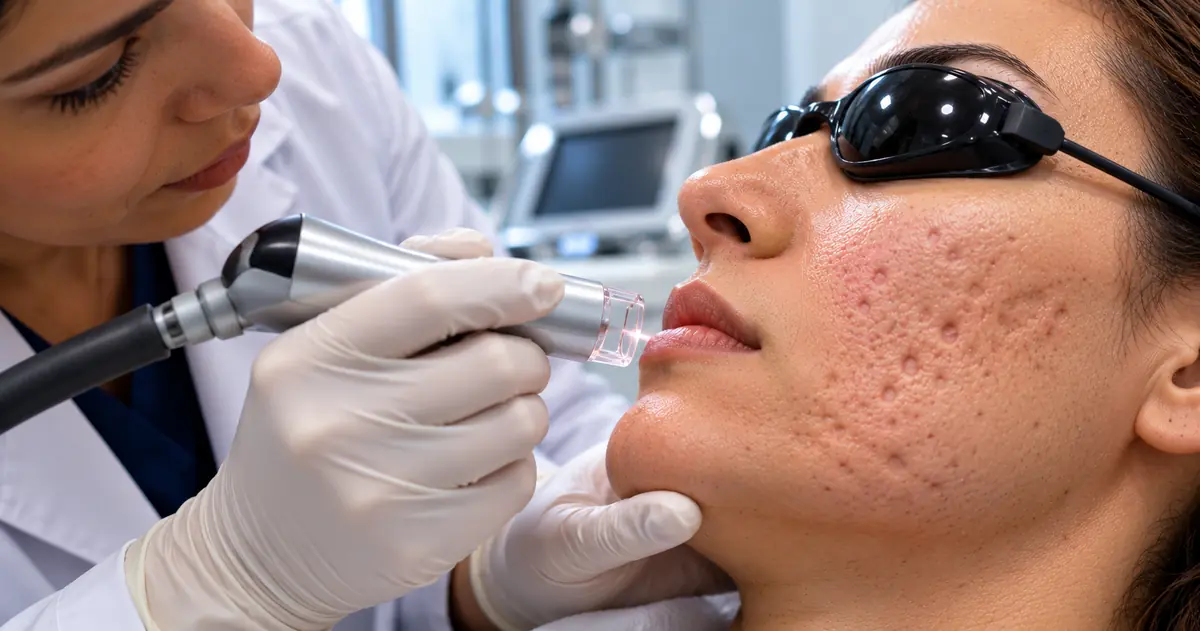
If you are searching for derma acne scars treatments, the most useful place to start is not with a laser name, peel strength, or trending procedure. Start by identifying what acne actually left behind. Rolling, boxcar, ice-pick, and raised scars have different structures, so the treatment that makes sense for one can be disappointing for another.
The short answer is that there is no single best procedure for every acne scar. Dermatologists usually match treatment to scar type, depth, tethering, skin tone, active acne, downtime tolerance, and treatment goals. Mixed scarring often needs a combination plan rather than one procedure used everywhere. For that reason, a useful derma acne scars guide should compare treatments by scar structure instead of ranking one procedure for everyone.
Table of Contents
Derma Acne Scars: First Identify What Acne Left Behind
Before comparing procedures, separate true scars from flat post-acne marks. This prevents spending money on a treatment that targets the wrong problem.
Flat Dark Marks
Brown, tan, gray, or bluish areas that remain after a breakout are often post-inflammatory hyperpigmentation. The skin surface stays flat; the main change is color. These marks can fade over time and may respond to sun protection and pigment-focused topical care.
If this sounds like your concern, see our guide to which acne-scar products are useful for marks rather than deep pits.
Flat Red or Pink Marks
Red, pink, or purple marks can linger after inflammation even when the skin is not indented. These are also different from structural scars. A resurfacing or surgical procedure may not be the first answer if color is the main issue.
Atrophic Acne Scars
Atrophic scars sit below the surrounding skin because acne inflammation damaged supporting tissue. Dermatologists usually divide these into three main patterns:
- Rolling scars: broad, shallow depressions that can create a wavy surface.
- Boxcar scars: round or oval depressions with more defined edges.
- Ice-pick scars: narrow, deep pits that extend farther into the skin.
Many people have more than one type at the same time. That is one reason derma acne scars treatment often works better as a tailored plan than as a single universal procedure.
Raised Scars
Hypertrophic scars and keloids rise above the surrounding skin because too much scar tissue forms. They require a different treatment strategy from depressed scars. A procedure designed to stimulate collagen in a pit is not automatically appropriate for a raised scar.
Derma Acne Scars: Best Treatments by Scar Type
The best treatment depends on the structural problem beneath the visible scar. A simple way to think about it is:
| Scar type | Main structural issue | Treatments often considered |
|---|---|---|
| Rolling | Broad depression, sometimes tethered | Subcision, fillers, microneedling/RF microneedling, laser |
| Boxcar | Sharply edged depression | Microneedling, laser, selected punch techniques, chemical resurfacing |
| Ice-pick | Narrow, deep tract | TCA CROSS, punch excision, selected combination treatment |
| Raised | Excess scar tissue | Steroid injections, laser, or other dermatologist-directed scar treatment |
This is a decision framework, not a prescription. Two scars that look similar in a mirror can differ in depth, fibrosis, and response to treatment. In practice, derma acne scars treatment works best when the visible scar pattern is matched to the structural problem underneath.
Rolling Acne Scars: Why Tethering Changes the Plan
Rolling scars are often broad and soft-edged. Some are held down by fibrous bands connecting the skin to deeper tissue. When that tethering is important, simply resurfacing the top may not fully correct the depression.
Subcision is designed to release those fibrous attachments. A clinician passes a needle or specialized instrument beneath the scar to break the bands pulling the skin downward. Once released, the depression may rise, and another treatment can sometimes be used later to improve remaining texture.
Subcision can also be combined with fillers, microneedling, or laser in selected cases. That does not mean every rolling scar requires a combination; the point is to address the mechanism causing the depression.
For derma acne scars with a visibly rolling or wavy pattern, asking whether the scars are tethered is often more useful than immediately asking which laser is strongest.
Boxcar Acne Scars: Depth Matters
Boxcar scars have more defined edges than rolling scars. Some are shallow and broad, while others are deeper and more sharply cut into the skin.
Shallow Boxcar Scars
Shallower boxcar scars may be considered for:
- Microneedling
- Radiofrequency microneedling
- Fractional laser resurfacing
- Selected chemical-resurfacing approaches
These treatments aim to stimulate remodeling across a wider area rather than remove one individual scar.
Deep Boxcar Scars
A deep boxcar scar may respond less completely to surface remodeling alone. Dermatologists may consider punch elevation, punch excision, or another focal technique, sometimes followed by resurfacing to blend the surrounding texture.
This is why comparing derma acne scars treatments only by procedure name can be misleading. “Boxcar scar” describes a shape, but depth and edge characteristics still change the decision.
Ice-Pick Acne Scars: Why General Resurfacing May Not Be Enough
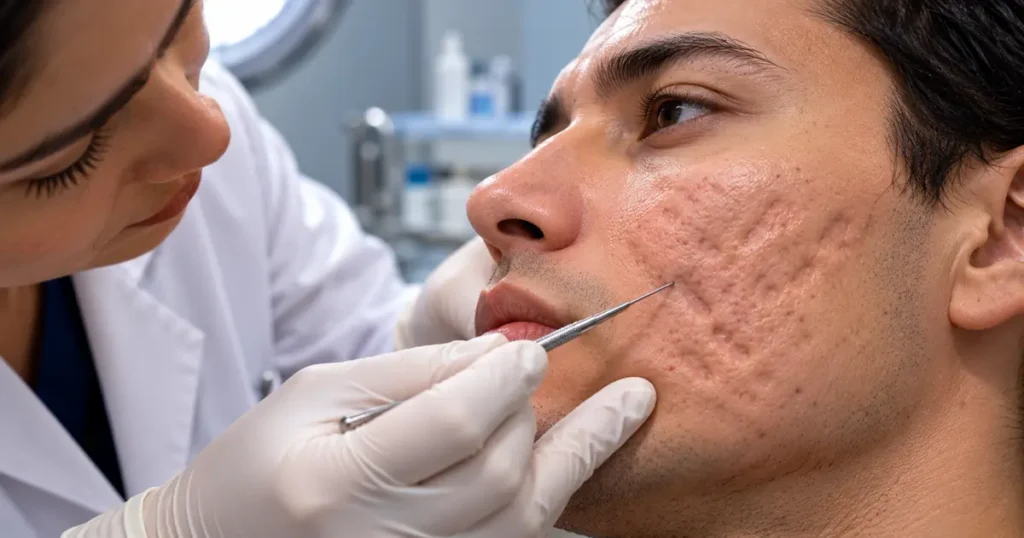
Ice-pick scars are narrow at the surface and extend more deeply into the skin. Their shape can make broad resurfacing less efficient because the deepest part of the scar is difficult to reach without unnecessarily treating a large amount of surrounding skin.
TCA CROSS is one focal option a dermatologist may use. A high concentration of trichloroacetic acid is placed precisely inside the scar to create a controlled inflammatory response that encourages remodeling. Punch excision can also be considered for selected deep pits.
Laser or microneedling may still be part of a broader plan, especially when a person has mixed scar types, but deep ice-pick scars often need a targeted approach rather than relying on general resurfacing alone.
Derma Acne Scars Treatment Options Compared
Understanding what each procedure actually does makes it easier to interpret a treatment plan.
Microneedling
Microneedling creates many controlled needle injuries in the scarred skin. The healing response stimulates collagen and elastin remodeling. It is commonly used for atrophic acne scars and usually involves a series of sessions rather than one treatment.
One advantage is that microneedling can be used across skin tones when performed appropriately. Improvement is usually gradual, and very deep or tethered scars may still need another procedure.
Radiofrequency Microneedling
RF microneedling combines needles with radiofrequency energy delivered into deeper tissue. It can target texture while limiting some surface injury, but device settings, needle depth, and operator technique matter.
It should not be treated as interchangeable with ordinary microneedling. The added energy changes both the treatment effect and the risk profile.
Laser Resurfacing
Laser resurfacing can remodel acne-scar texture by removing controlled amounts of surface tissue, heating deeper tissue, or both. Ablative, nonablative, and fractional devices differ substantially in intensity and downtime.
For readers comparing professional options, our broader treatment guide for acne scars explains where resurfacing fits among other procedures, while what affects the cost of laser acne-scar treatment covers the main pricing variables.
Laser can be useful for selected boxcar and rolling scars, but it cannot mechanically release a tethered scar and may not be the most direct option for a very deep ice-pick scar.
Subcision
Subcision targets fibrous tethering rather than the skin surface. This makes it especially relevant to rolling scars that are pulled downward.
Bruising, swelling, bleeding, infection, pigment change, and other complications are possible, so it should be performed by an appropriately trained clinician.
TCA CROSS
TCA CROSS treats scars one by one. It is most often discussed for ice-pick scars and selected narrow boxcar scars.
Because concentrated acid is used focally, precision matters. Pigmentary changes and other adverse effects are possible, particularly if the procedure is performed improperly.
Fillers
A filler can raise selected depressed scars by adding volume beneath them. Results may be immediate, but many fillers are temporary and may require repeat treatment.
Fillers can be helpful for some rolling or soft-edged depressions, but they do not correct every type of scar.
Punch Techniques
Punch excision removes an individual scar and closes the area. Punch elevation lifts the base of a selected scar. These procedures can make sense for a small number of deep, well-defined scars that are poorly suited to broader resurfacing.
Chemical Peels
Chemical peels remove controlled layers of skin to improve texture and discoloration. Depth varies from superficial to deeper peels, and the risk of pigment change increases with more aggressive treatment.
Chemical peels are not interchangeable with TCA CROSS: a peel treats a broader surface, while CROSS applies concentrated acid directly into selected scars. This distinction matters when comparing derma acne scars procedures that may sound similar but treat very different targets.
Is Combination Treatment Better Than One Procedure?
For moderate or severe atrophic scarring, combination treatment can make sense because one face may contain several structural problems at once. A person could have tethered rolling scars, shallow boxcar scars, and a few deep ice-pick scars. One procedure is unlikely to target all three equally well.
A 2026 network meta-analysis of 56 randomized trials and 1,488 participants found that combination approaches generally performed better than monotherapies across several scar outcomes. However, the study also emphasized variation in pain, downtime, scar type, skin phototype, and evidence certainty.
Another 2026 evidence review found the comparative network too sparse and uncertain to support a dependable universal treatment hierarchy.
That means the evidence supports individualized combination thinking more than a simplistic “best procedure” ranking.
When evaluating derma acne scars treatment, ask what problem each proposed procedure is supposed to solve. If two procedures are recommended, each should have a clear role.
How Dermatologists Build a Derma Acne Scars Treatment Plan
A good treatment plan considers more than the scar name.
Scar Morphology and Depth
The clinician should identify whether scars are rolling, boxcar, ice-pick, raised, or mixed and note which are shallow versus deep.
Tethering
Rolling scars should be assessed for fibrous attachment. If the skin cannot lift because it is physically tethered, surface treatment alone may have limits.
Skin Tone
Medium and deep skin tones can receive effective acne-scar treatment, but the risk of post-inflammatory hyperpigmentation must be considered. Aggressive inflammation, inappropriate laser settings, or poorly controlled chemical treatment can leave unwanted pigment changes.
Active Acne
If inflammatory breakouts are still occurring, controlling the acne is usually part of the plan before intensive scar procedures. Otherwise, new scars can continue forming while older ones are being treated. AAD guidance similarly notes that scar treatment commonly follows control of active breakouts.
Downtime
Some treatments cause only short-lived redness, while more aggressive resurfacing can require substantially more recovery. A treatment that looks attractive in a before-and-after gallery may not fit your work schedule or tolerance for healing time.
Budget
Procedures often require multiple sessions, and combination plans can add cost. Before committing, ask for the expected course rather than comparing only the price of one session.
Previous Treatments
Your dermatologist should know about prior laser procedures, chemical peels, microneedling, isotretinoin history, current medications, and any tendency to develop abnormal scars or pigment changes.
Acne-Scar Treatment and Skin Tone
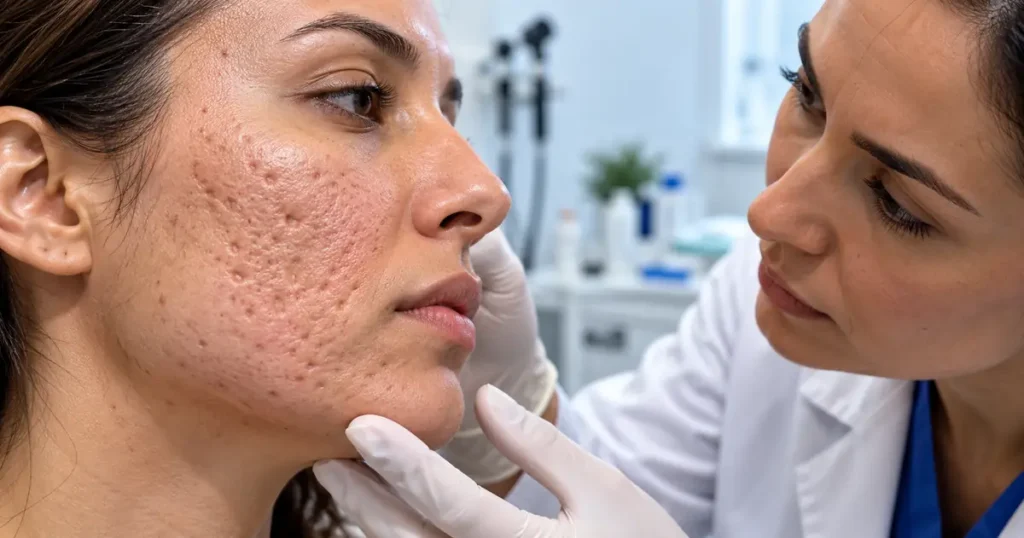
Skin tone can change the risk-benefit calculation, especially for lasers, deeper peels, and other procedures that create substantial inflammation. Any derma acne scars plan should account for pigment-change risk before an aggressive procedure is chosen.
Post-inflammatory hyperpigmentation is more noticeable and often more persistent in darker skin tones. That does not mean people with darker skin should avoid professional scar treatment. It means the device, energy, depth, interval, pre-treatment plan, and clinician experience need careful consideration.
Microneedling is one option the American Academy of Dermatology describes as safe for all skin tones. Lasers can also be used in darker skin, but treatment selection should account for pigmentary risk.
For derma acne scars in medium to deep skin tones, ask the clinician how often they treat patients with a similar complexion and what they do to reduce and manage pigment complications.
How Much Improvement Should You Expect?
Acne-scar treatment should usually be framed as improvement, not complete removal.
A deep scar represents a structural change in the skin. Procedures can remodel, release, elevate, fill, or blend that change, but they do not guarantee restoration of completely unscarred skin.
Results depend on:
- Scar type and depth
- Number of scars
- Skin tone
- Treatment intensity
- Number of sessions
- Healing response
- Whether the scars are tethered
- Whether several treatments are combined
Collagen remodeling also takes time. Early swelling after a procedure can temporarily make depressed scars look smoother, so immediate photos may not represent the final result.
If your concern is mostly discoloration rather than pits, our guide to what topical acne-scar treatments can realistically improve may be more relevant than an in-office scar procedure.
When Active Acne Should Be Treated First
Treating scars while new inflammatory acne is still creating fresh damage can be frustrating and inefficient. Dermatologists commonly work on controlling active acne before beginning a major scar-correction plan.
That does not mean every blemish must disappear forever before scar care can start. It means ongoing acne activity, medications, inflammation, and the risk of new scarring should be considered when timing procedures.
For many people searching derma acne scars options, preventing the next scar is just as important as treating the ones already present.
What to Ask a Dermatologist Before Choosing Treatment
A consultation should give you more than the name of a device or package.
Ask:
- What scar types do I have?
- Which scars are tethered?
- Which procedure targets each scar type?
- Why are you recommending this procedure instead of an alternative?
- Would combination treatment help, and what is the purpose of each step?
- How many sessions might I need?
- What downtime should I expect?
- What are the most important risks for my skin tone?
- How much improvement is realistic?
- What happens if the first treatment does not give enough improvement?
- Do you regularly treat acne scars in patients with my skin tone?
A strong answer should connect the procedure to your scar pattern rather than relying on vague claims that a device is the “best” or “latest.”
Frequently Asked Questions
What Is the Best Dermatologist Treatment for Pitted Acne Scars?
There is no single best treatment for all pitted scars. Rolling scars may benefit from subcision when tethered, shallow boxcar scars may respond to microneedling or resurfacing, and deep ice-pick scars often need focal options such as TCA CROSS or punch techniques. Mixed patterns may need combination treatment.
Is Microneedling or Laser Better for Acne Scars?
It depends on scar depth, skin tone, downtime tolerance, previous treatment, and the type of laser being considered. Microneedling can be useful across skin tones and generally involves gradual improvement. Laser resurfacing can deliver stronger remodeling in selected scars but may involve more downtime and pigment risk.
What Treatment Works Best for Rolling Acne Scars?
If rolling scars are tethered, subcision is often considered because it releases the fibrous bands pulling the skin downward. Microneedling, laser, fillers, or RF microneedling may then be used for remaining texture or volume depending on the individual scar pattern.
Can Derma Acne Scars Be Completely Removed?
No procedure can promise complete removal of every scar. Derma acne scars treatments can make scars less noticeable by releasing tethering, remodeling collagen, filling depressions, or blending scar edges. The amount of improvement varies by scar type, depth, skin characteristics, treatment choice, and healing response.
Which Acne-Scar Treatment Has the Least Downtime?
Lower-intensity microneedling and some nonablative energy procedures generally involve less downtime than aggressive ablative resurfacing, but treatment protocols vary. Less downtime does not automatically mean better value because milder approaches may require more sessions. Ask about the recovery expected from the exact device, depth, and settings being proposed.
Conclusion
The smartest way to approach derma acne scars is to start with scar structure, not the trendiest procedure. A thoughtful derma acne scars plan should explain why each procedure fits a specific scar pattern.
Rolling, boxcar, ice-pick, and raised scars behave differently, and mixed scarring often needs more than one technique.
A dermatologist can identify which scars are tethered, which are deep, which are primarily color changes, and which procedure is likely to address each problem. Go into the consultation looking for a clear reason behind every treatment recommendation and realistic expectations about improvement, downtime, risk, and cost.
This article is for educational purposes only and is not a diagnosis or a substitute for care from a qualified healthcare professional.
References:
- American Academy of Dermatology — Acne scars: Consultation and treatment. AAD source
- Mayo Clinic — Acne scars: What’s the best treatment? Mayo Clinic source
- Cleveland Clinic — Acne Scars: Causes, Diagnosis, Types & Treatment. Cleveland Clinic source
- DermNet — Acne Scarring. DermNet acne scarring source
- DermNet — TCA CROSS. DermNet TCA CROSS source
- Ou et al. — Laser, Microneedling, and Combination Therapies for Moderate to Severe Acne Atrophic Scars: A Systematic Review and Network Meta-Analysis. PubMed 2026 review
- Minimally Invasive Interventions for Atrophic Acne Scars: Systematic Evidence Review and Exploratory Network Meta-Analysis. PubMed evidence review