What Causes Butt Acne? 7 Reasons You May Get Butt Bumps
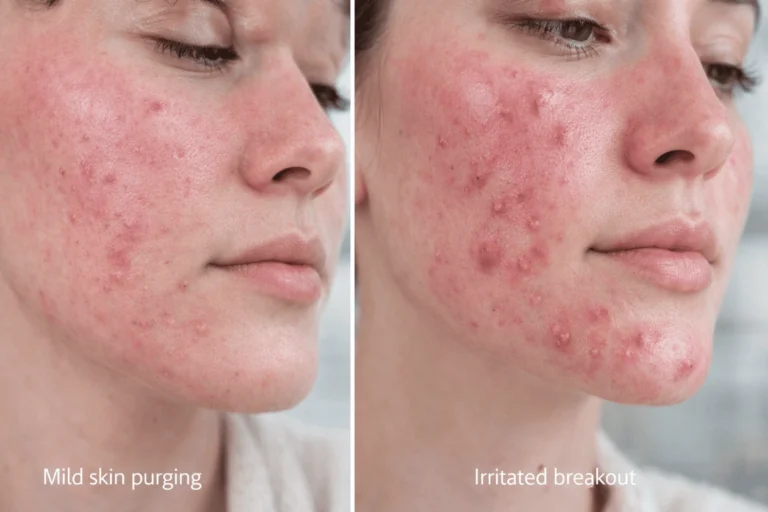
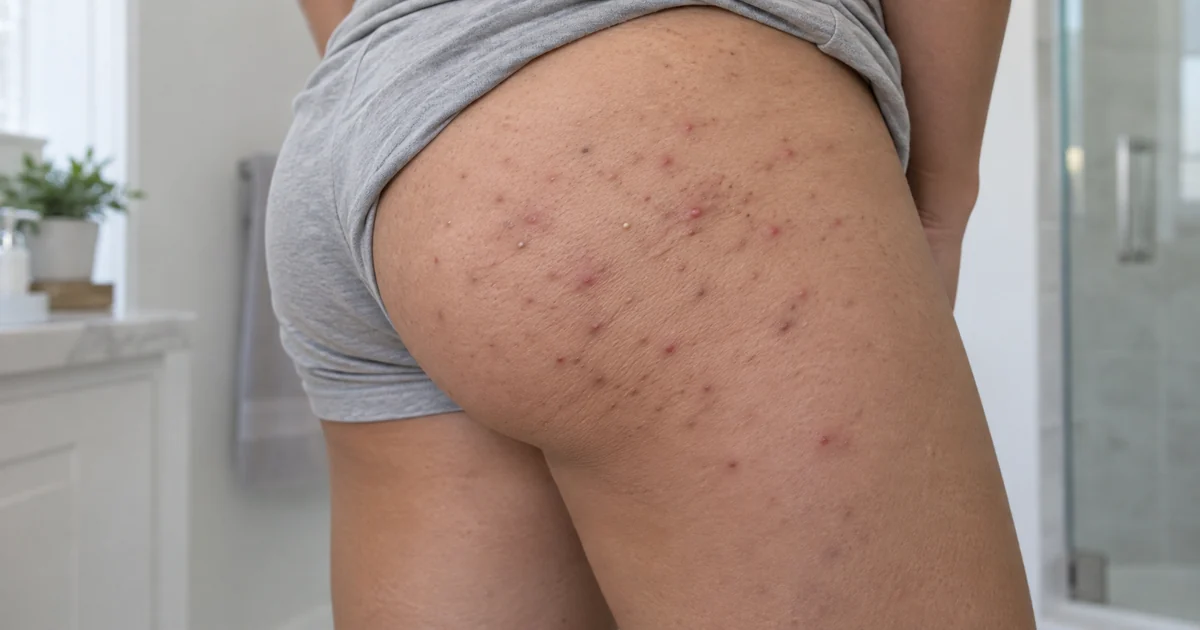
If you keep getting bumps on your buttocks, it is easy to assume you have acne. But what causes butt acne is often more complicated than clogged pores. Many pimple-like bumps on the buttocks are actually folliculitis, keratosis pilaris, ingrown hairs, boils, or another condition rather than acne vulgaris.
Quick answer: What causes butt acne-like bumps most often is irritation or inflammation around hair follicles. Sweat, friction, tight clothing, shaving, waxing, ingrown hairs, and plugged follicles can all play a role. True acne can occur on the buttocks, but it is less typical than several look-alike conditions.
A common question behind what causes butt acne is whether the problem comes from poor hygiene. Usually, that is too simple an explanation.
The useful first step is not to attack every bump with stronger acne products. It is to notice the pattern: Are the bumps itchy and centered around hairs? Rough and dry? Deep and painful? Do they show up after workouts or hair removal? Those clues can help you understand which explanation is more plausible, although they cannot confirm a diagnosis by themselves.
Table of Contents
What Causes Butt Acne? The 7 Most Common Explanations
When people ask what causes butt acne, they are often describing several different skin problems under one everyday label. Cleveland Clinic notes that the most common causes of so-called butt acne are folliculitis, keratosis pilaris, and boils rather than acne itself.
1. Folliculitis
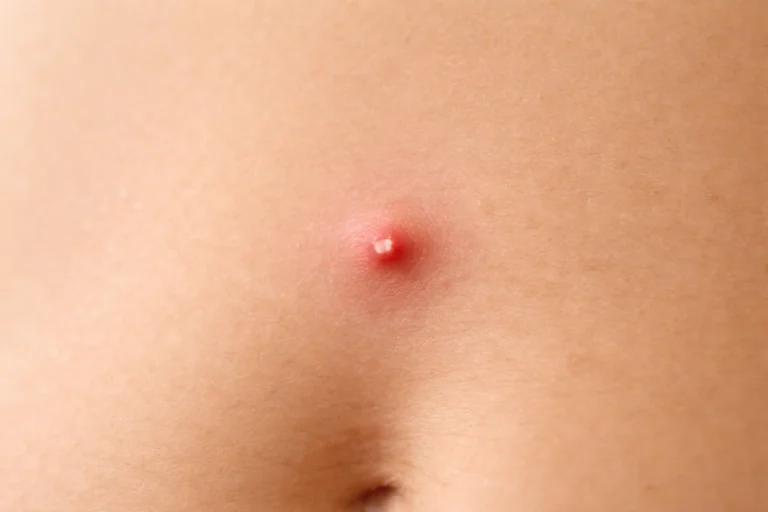
Folliculitis is inflammation of a hair follicle. It often looks like a sudden crop of small pimples, sometimes with redness around each follicle. The bumps may itch, burn, or feel tender.
The American Academy of Dermatology explains that follicles can be damaged by rubbing, tight clothing, shaving, waxing, or plucking. Once a follicle is damaged, bacteria or other microorganisms can enter more easily and trigger inflammation or infection. Heat and dampness can make that process easier.
That is why folliculitis is such an important answer to what causes butt acne. The buttocks are hair-bearing skin that often stays covered, gets warm, and experiences friction from underwear, pants, exercise, or sitting.
Folliculitis does not have one single cause. Bacteria are common, but yeast, viruses, medications, and physical irritation can also be involved. If bumps are very itchy and look unusually uniform, a different type of folliculitis may be worth considering; our guide to pityrosporum folliculitis explains one yeast-related form in more detail.
2. Sweat, Friction, and Tight Clothing
Sweat alone does not automatically create pimples. The problem is the environment that can develop when sweat stays against the skin while fabric repeatedly rubs the same follicles.
Tight leggings, cycling shorts, compression gear, snug underwear, or sports uniforms can hold heat and moisture against the buttocks. The AAD specifically lists tight clothing, skin-to-skin rubbing, and hot, damp conditions among factors that can damage follicles and contribute to folliculitis.
This is also why some people notice more bumps after intense exercise. If that pattern sounds familiar, our guide to other common body-acne triggers covers how sweat, friction, and clothing can affect breakouts on nearby body areas.
3. Shaving, Waxing, and Ingrown Hairs
Hair removal can create bumps that look like acne even when no acne is present. Shaving too closely can irritate the follicle or allow a hair to curve back into the skin. Waxing and plucking can also traumatize follicles.
Mayo Clinic describes razor bumps, or pseudofolliculitis, as inflammation caused by ingrown hairs rather than infected follicles.
If the bumps consistently appear after shaving or waxing, pause before assuming what causes butt acne is excess oil. Hair-removal technique and ingrown hairs may be the more relevant clue.
4. Keratosis Pilaris
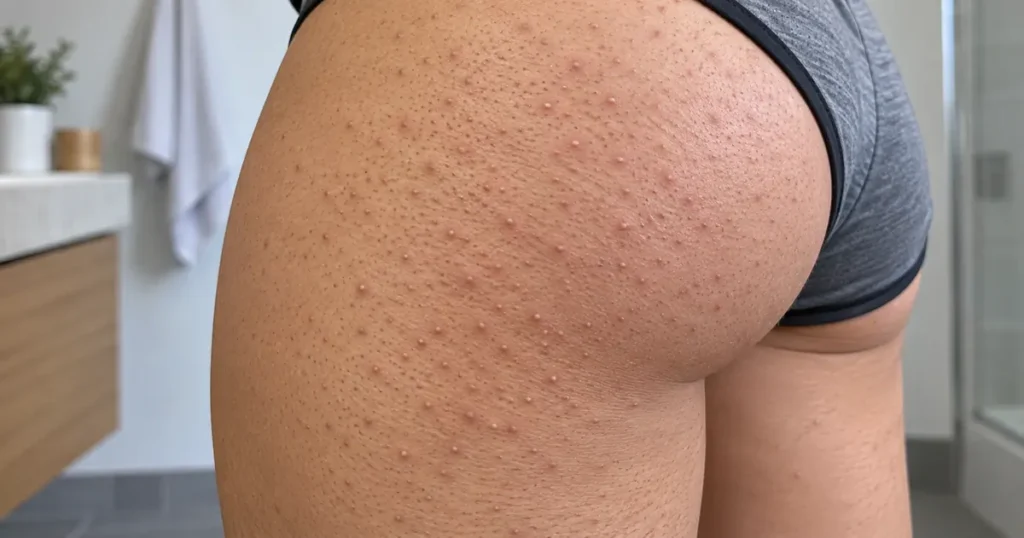
Keratosis pilaris causes many tiny, rough bumps that can look like small pimples but usually feel more like sandpaper or goosebumps.
The AAD explains that keratosis pilaris happens when dead skin cells plug hair follicles. Dry skin can make the rough texture more noticeable.
This condition is especially easy to confuse with acne when the bumps are reddish or dark against the surrounding skin. Unlike a boil or inflamed folliculitis, keratosis pilaris is usually more about rough texture than deep pain or pus.
⭐ Rough, Dry Bumps? Consider First Aid Beauty’s KP Lotion
If your bumps have been identified as keratosis pilaris, a smoothing lotion may make more sense than another acne spot treatment. First Aid Beauty KP Smoothing + Brightening Body Lotion combines 10% lactic acid with urea to exfoliate rough texture while hydrating dry skin.
The 6.7 fl oz Fresh Peach version is a standout option for readers who prefer a leave-on lotion over a gritty scrub.
Follow the label and introduce it gradually on intact outer skin. Avoid freshly shaved, broken, or irritated areas. This scented formula may not suit fragrance-sensitive skin, and it is not a treatment for boils or infected follicles.
👀 Explore First Aid Beauty KP Lotion & Check Price ➜
5. Boils and Deeper Follicle Infections
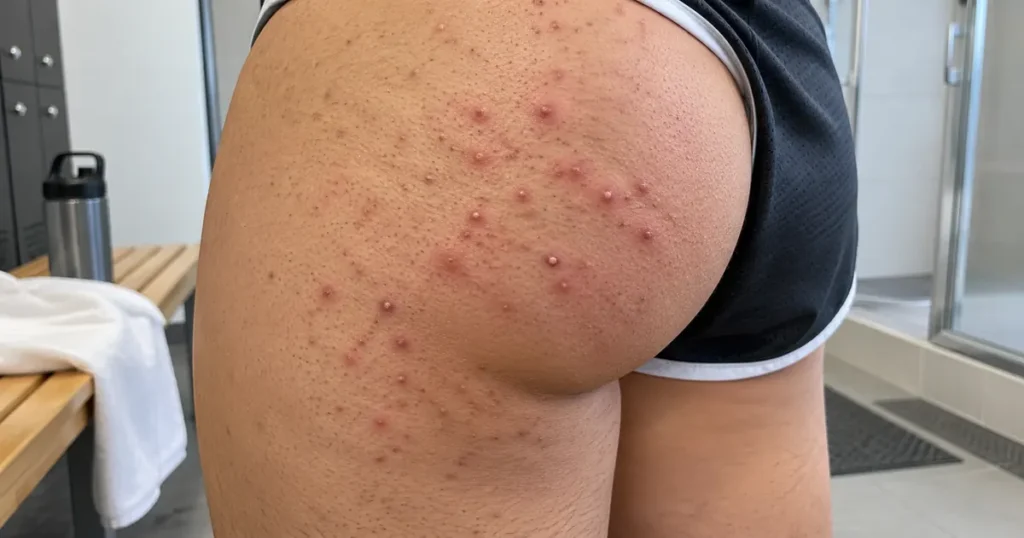
A boil, or furuncle, is deeper than a typical superficial folliculitis bump. Mayo Clinic describes boils as painful, pus-filled bumps that form when bacteria infect and inflame one or more hair follicles. The buttocks are one of the areas where boils commonly occur.
A single boil may begin as a tender red or purple lump and become larger and more painful as it fills with pus. A carbuncle is a connected cluster of boils.
Do not squeeze, puncture, or try to drain a boil yourself. Doing so can spread infection. The AAD recommends keeping the area clean and seeking medical care when pain or swelling persists, the boil does not go away, another one appears, or fever develops.
6. True Acne
True acne vulgaris can affect the body, including the buttocks, but it should not be assumed every time you see a pimple-like bump there. The AAD notes that severe acne can sometimes develop on the buttocks.
Acne is more likely when you see a mixture of lesion types, such as whiteheads, blackheads, inflamed pimples, and possibly deeper nodules. Folliculitis, by contrast, often appears as more uniform bumps centered around follicles.
The distinction matters because a treatment aimed at clogged pores may not solve a bacterial, yeast-related, or ingrown-hair problem.
7. Hidradenitis Suppurativa and Other Look-Alikes
Recurring deep, painful bumps around the buttocks, groin, or upper thighs deserve more attention than an ordinary pimple.
Hidradenitis suppurativa (HS) can begin with tender deep nodules that look like acne cysts or boils. The AAD notes that HS can affect the buttocks and inner thighs and may cause repeated lesions in the same areas, drainage, abscesses, and scarring.
This does not mean every painful buttock bump is HS. It means recurrent deep lumps should not simply be labeled “butt acne” and repeatedly self-treated without evaluation.
Contact dermatitis, eczema, and some infections can also produce bumps or rashes in this area. If the appearance is unusual, painful, blistering, spreading, or difficult to classify, a healthcare professional can examine it rather than relying on appearance alone.
What Causes Butt Acne After Workouts, Sitting, or Shaving?
Many searches for what causes butt acne are really about timing: “Why does this happen after the gym?” or “Why do I get bumps after shaving?”
Those patterns can be useful because they point toward repeated friction, moisture, or follicle trauma.
After a Workout
Exercise creates heat and sweat. Tight athletic clothing can then keep that moisture against the skin while rubbing the same follicles over and over.
The AAD recommends changing out of tight workout clothing promptly and showering after exercise when possible to reduce the conditions that encourage folliculitis.
You do not need to scrub hard. Gentle cleansing is enough. Aggressive exfoliation can create more irritation and make follicular bumps harder to interpret.
🚿 Post-Workout Washing Leaving Your Skin Tight?
If showering after exercise leaves your skin dry and uncomfortable, consider a cleanser designed for dry skin. Bioderma Atoderm Shower Oil offers soap-free cleansing in a rinse-off formula, making it a practical choice for washing away sweat without adding an exfoliating treatment.
Choose the 33.8 fl oz / 1-liter pump bottle for regular body use. Apply to wet skin, cleanse gently with your hands, and rinse thoroughly.
It contains fragrance, so choose a fragrance-free alternative if scents trigger irritation. This is a cleansing step, not a treatment for folliculitis, boils, or hidradenitis suppurativa.
See Bioderma Atoderm Shower Oil & Check Amazon Price ➜
After Sitting for Long Periods
Sitting is not a proven direct cause of acne. But long periods of pressure can combine with warmth, sweat, and fabric friction, especially if clothing is tight or non-breathable.
That makes sitting more of an aggravating environment than a diagnosis. If bumps occur only in pressure-heavy or sweaty situations, note that pattern rather than concluding that sitting itself “causes acne.”
After Shaving or Waxing
If bumps appear within the areas you shave or wax, follicle injury and ingrown hairs move higher on the list of possibilities.
The AAD lists shaving, plucking, and waxing among common causes of follicle damage that can lead to folliculitis.
If hair removal repeatedly triggers bumps, giving the area time to recover and adjusting the method may be more useful than adding another acne product.
Is Poor Hygiene What Causes Butt Acne?
Usually, poor hygiene is not a complete explanation for what causes butt acne.
You can shower every day and still develop folliculitis, keratosis pilaris, ingrown hairs, boils, or true acne. These conditions involve follicles, friction, inflammation, keratin buildup, microorganisms, and other factors that are not simply a matter of being “dirty.”
Over-washing can backfire. Harsh scrubs, rough loofahs, repeated exfoliation, and forceful rubbing can irritate the skin and damage follicles further. For keratosis pilaris, the AAD specifically advises gentle exfoliation and warns that scrubbing can worsen irritation.
If your bumps itch strongly, that symptom may also point away from classic acne. Our guide to what an itchy breakout may mean explains why itching can be an important clue.
How to Tell Which Type of Butt Bump You Might Be Dealing With
The table below is a pattern guide, not a diagnostic test.
| What you notice | One possible explanation | Clue that may help |
|---|---|---|
| Small similar bumps around hairs | Folliculitis | May itch, burn, or feel tender |
| Tiny rough dry bumps | Keratosis pilaris | Sandpaper or goosebump texture |
| Bump after shaving or waxing | Ingrown hair / razor irritation | Appears in a recently treated hair-bearing area |
| One larger painful pus-filled lump | Boil | Deeper, more tender, may enlarge over days |
| Whiteheads, blackheads, and inflamed pimples together | Acne vulgaris | Mixed lesion types rather than uniform bumps |
| Recurrent deep painful lumps, drainage, or scars | Possible HS | Often returns in friction areas such as buttocks or groin |
Another reason what causes butt acne can be confusing is that several conditions share the same basic look.
The main point is that what causes butt acne cannot be determined reliably from the word “pimple” alone. The pattern, symptoms, timing, and location matter.
What Can You Do About Recurrent Butt Bumps?
Because several conditions can look similar, start with low-risk habits that reduce irritation rather than throwing multiple active products at the skin.
You can:
- Change out of sweaty workout clothes soon after exercise.
- Shower after heavy sweating when practical.
- Choose looser, breathable clothing if friction seems to trigger bumps.
- Avoid forceful scrubbing and picking.
- Pause close shaving or waxing if bumps consistently follow hair removal.
- Keep a boil clean and avoid squeezing or puncturing it.
If rough, dry bumps turn out to be keratosis pilaris, the approach is different from treating a boil or bacterial folliculitis. The AAD lists keratolytic ingredients such as lactic acid, glycolic acid, salicylic acid, retinoids, and urea among options dermatologists may use for keratosis pilaris.
If you are considering salicylic acid, our salicylic acid uses guide explains why an acne wash, rough-skin lotion, and high-strength product are not interchangeable.
👀 Prefer a Fragrance-Free Option for Rough, Clogged Skin?
When rough texture and clogged follicles are the concern, Paula’s Choice Weightless Body Treatment 2% BHA is another option to consider. Its lightweight lotion contains 2% salicylic acid to exfoliate built-up dead skin and soften bumpy texture.
The 7 fl oz bottle suits readers looking for a fragrance-free body exfoliant with a moisturizing lotion texture.
Choose this instead of the lactic-acid lotion above, rather than starting both together. Introduce gradually according to the label and use only on intact outer skin, away from genital and anal areas. Deep, painful, draining, or persistent bumps need assessment rather than stronger exfoliation.
Shop Paula’s Choice 2% BHA Body Treatment & Check Price ➜
The safest product choice depends on what the bumps actually are. That is why understanding what causes butt acne should come before building an aggressive treatment routine.
When Should Butt Bumps Be Checked by a Doctor?
Get medical advice when the diagnosis is unclear or the bumps are persistent, widespread, recurrent, or unusually painful.
Mayo Clinic recommends medical evaluation when folliculitis is widespread or does not improve after a week or two of self-care. Sudden increasing redness or pain, fever, chills, or feeling generally unwell can indicate a spreading infection and warrant prompt care.
You should also seek professional evaluation if you have:
- Repeated boils.
- A large or very painful lump.
- Drainage that keeps returning.
- Scarring or tunnels under the skin.
- Deep lesions repeatedly appearing in the buttock, groin, or upper-thigh area.
- Rapidly spreading redness.
- Fever or chills.
- Persistent bumps despite sensible trigger reduction.
The AAD specifically notes that repeated boil-like lumps on the buttocks, groin, underarms, or under the breasts may be hidradenitis suppurativa. Early diagnosis can matter because treatment may help prevent progression.
Frequently Asked Questions
Why do I get butt acne even though I shower every day?
Daily showering does not prevent every condition that creates buttock bumps. Folliculitis can be triggered by friction, tight clothing, shaving, or heat and moisture; keratosis pilaris comes from dead skin cells plugging follicles; and ingrown hairs can follow hair removal. Hygiene is only one part of the picture.
Can tight leggings cause butt pimples?
Tight leggings do not automatically cause acne, but they can create friction and trap heat and sweat against the skin. The AAD identifies tight clothing and rubbing as factors that can damage follicles and contribute to folliculitis, especially in hot or damp conditions.
Why do I get pimples on my butt after working out?
A workout combines sweat, warmth, damp fabric, and repeated movement. Those conditions can irritate follicles, especially under tight clothing. If bumps repeatedly appear after exercise, change out of sweaty clothes promptly, shower when practical, and reduce friction while you monitor whether the pattern improves.
Are butt pimples actually folliculitis?
Often, but not always. Folliculitis is one of the most common reasons for acne-like bumps on the buttocks, but keratosis pilaris, ingrown hairs, boils, true acne, and other conditions can look similar. If the bumps persist, recur, or are painful, a clinician can distinguish among them.
Can stress cause butt acne?
Stress by itself does not tell you what causes butt acne. It may affect inflammatory skin conditions in some people, but a recurring buttock breakout still needs the more direct possibilities considered first: folliculitis, friction, sweat, hair removal, keratosis pilaris, true acne, boils, or another condition.
Conclusion
Understanding what causes butt acne starts with recognizing that the name can be misleading. Folliculitis, sweat and friction, shaving, ingrown hairs, keratosis pilaris, boils, true acne, and hidradenitis suppurativa can all create bumps in the same general area, but they do not require the same response.
Instead of scrubbing harder or stacking acne products, look for patterns in timing, texture, pain, itching, and recurrence. If bumps are deep, painful, draining, spreading, scarring, or repeatedly returning, have them examined by a qualified healthcare professional.
This article is for general educational information and is not a diagnosis or a substitute for care from a qualified healthcare professional.
References:
- American Academy of Dermatology — Acne-like breakouts could be folliculitis. AAD folliculitis guidance
- American Academy of Dermatology — Keratosis pilaris: Who gets and causes. AAD keratosis pilaris guidance
- American Academy of Dermatology — Hidradenitis suppurativa: Signs and symptoms. AAD HS guidance
- Mayo Clinic — Folliculitis: Symptoms & causes. Mayo Clinic folliculitis guidance
- Mayo Clinic — Boils and carbuncles: Symptoms & causes. Mayo Clinic boil guidance
- Cleveland Clinic — Butt Acne: Causes, Treatment and Prevention. Cleveland Clinic butt acne overview
- First Aid Beauty KP Smoothing + Brightening Body Lotion
- Bioderma Atoderm Shower Oil
- Paula’s Choice Weightless Body Treatment 2% BHA
- American Academy of Dermatology: Keratosis Pilaris Self-Care