Dry Acne Prone Skin: Best Products to Fight Breakouts
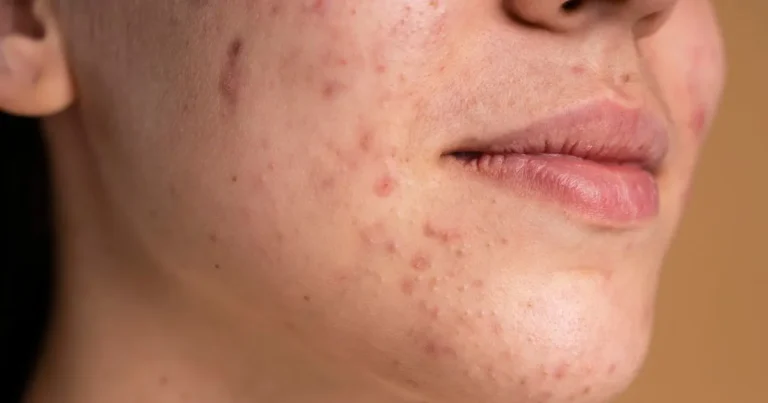
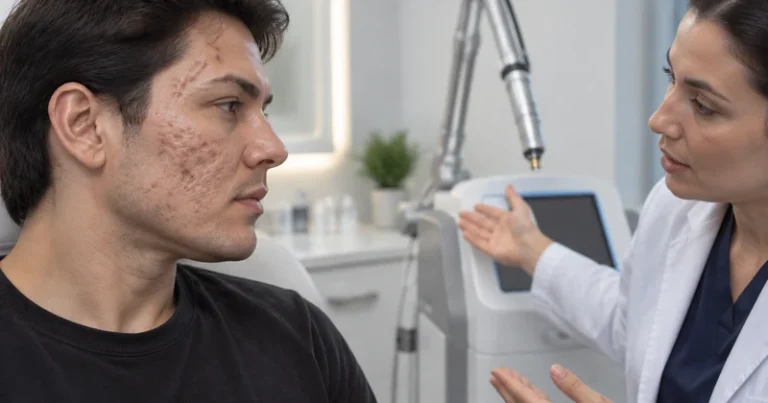
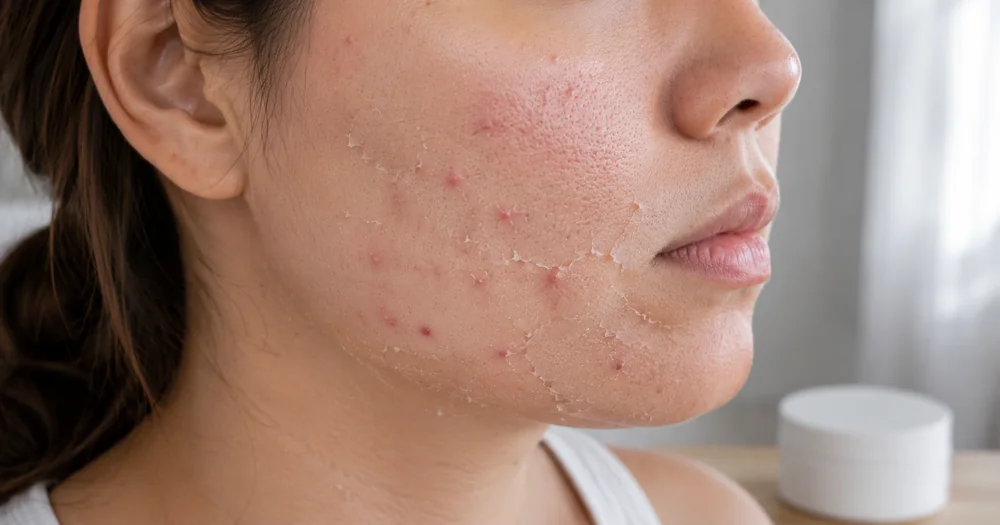
If you have dry acne prone skin, the usual advice to “dry out” pimples can make things worse. Acne can happen even when your face feels tight, flaky, or sensitive, and common treatments such as benzoyl peroxide, salicylic acid, and retinoids can add more dryness. The goal is to treat breakouts without turning the rest of your routine into a source of irritation.
For many people, the simplest approach is a gentle cleanser, one evidence-supported acne treatment, a non-comedogenic moisturizer, and broad-spectrum sunscreen. You may need a medicated cleanser or leave-on treatment, but you do not need every acne active at once. Deep, painful, scarring, or persistent acne is a reason to see a dermatologist rather than keep escalating over-the-counter products.
Table of Contents
Dry Acne Prone Skin: What Should Your Products Actually Do?
Products for dry acne prone skin should work as a team: cleanse without excessive stripping, treat acne with one appropriate active, replace lost moisture, and protect the skin from UV exposure. A moisturizer does not cure acne, and a gentle cleanser does not replace medication, but both can make an effective acne treatment easier to tolerate and use consistently.
The American Academy of Dermatology (AAD) notes that several common acne treatments can dry or irritate the skin and that daily moisturizer can help people tolerate them.
Why Acne-Prone Skin Can Feel So Dry
Your baseline skin may simply be dry
Acne is not limited to oily skin. You can have clogged pores, whiteheads, inflamed pimples, or hormonal breakouts while also producing relatively little surface oil or feeling dry between breakouts.
AAD guidance recommends a gentle, non-abrasive cleanser and warns that astringents and unnecessary exfoliants can dry the skin and worsen irritation.
Acne treatments can create dryness
Effective treatments such as benzoyl peroxide, salicylic acid, adapalene and other retinoids can cause dryness or irritation. Isotretinoin is especially drying and typically calls for a gentle, moisturizing skincare routine.
Signs you may be over-treating
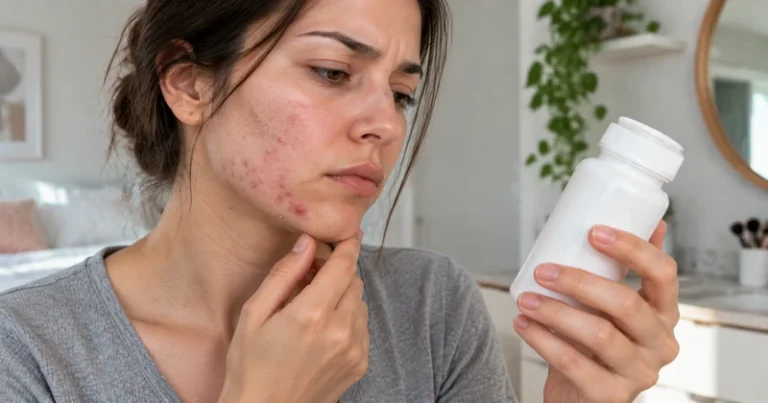
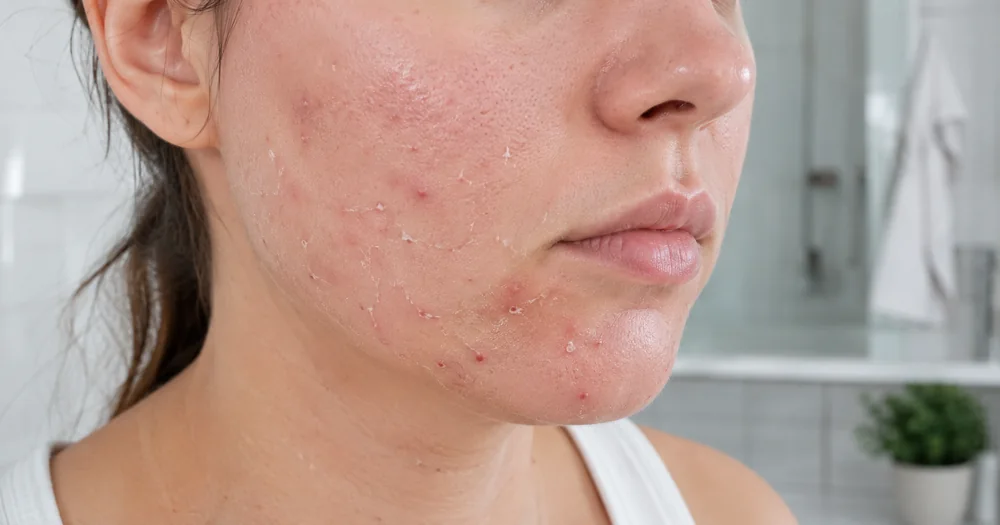
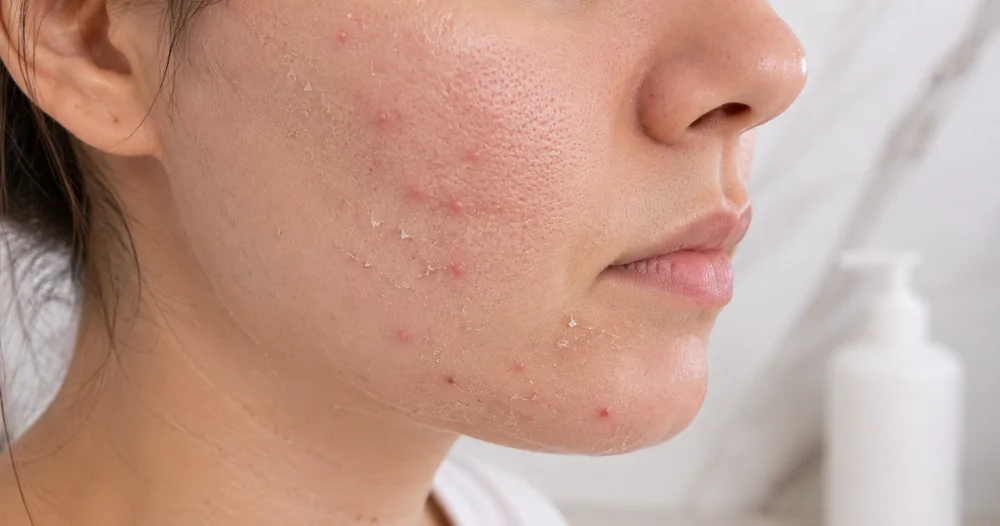
Persistent burning, cracking, marked peeling, widespread redness, pain, or a worsening rash are signs to reassess the routine. If dryness becomes cracked, bleeding, very itchy, or persistently irritating, AAD guidance recommends professional evaluation.
Best Products for Dry Acne Prone Skin at a Glance
| Routine role | Product | Why it may fit | Main limitation |
|---|---|---|---|
| Gentle cleanser | La Roche-Posay Toleriane Hydrating Gentle Facial Cleanser | Non-medicated, fragrance-free, non-comedogenic, made for normal-to-dry and sensitive skin | Does not treat acne by itself |
| Medicated cleanser | CeraVe Acne Foaming Cream Cleanser 4% | 4% benzoyl peroxide with ceramides, hyaluronic acid, and niacinamide | Benzoyl peroxide can still dry or irritate |
| Leave-on acne treatment | Differin Gel 0.1% Adapalene | Evidence-supported OTC retinoid for clogged pores and inflammation | Can cause dryness; avoid during pregnancy |
| Cream-like non-retinoid option | The Ordinary Azelaic Acid Suspension 10% | 10% azelaic acid; cream-like, non-comedogenic formula for blemish-prone skin and uneven tone | Cosmetic product; can still sting or irritate |
| Moisturizer | La Roche-Posay Toleriane Double Repair Face Moisturizer | Fragrance-free, oil-free, non-comedogenic, with ceramide-3, glycerin, niacinamide, and squalane | Not an acne medication |
| Sunscreen | EltaMD UV Clear Broad Spectrum SPF 46 | Non-comedogenic SPF 46 with zinc oxide and 5% niacinamide | Lightweight; very dry skin may need moisturizer underneath |
| Spot care | Hero Mighty Patch Original | Hydrocolloid patch for surfaced whiteheads without adding another drying acne active | Not for deep cystic acne or every type of blemish |
You do not need every item in this table. Aim for the smallest routine that treats acne while staying tolerable.
Best Gentle Cleanser: La Roche-Posay Toleriane Hydrating Gentle Facial Cleanser
A gentle cleanser is often the better choice if your main acne treatment happens later in the routine.
La Roche-Posay Toleriane Hydrating Gentle Facial Cleanser is currently positioned for normal-to-dry and sensitive skin. The manufacturer lists it as fragrance-free, oil-free, non-comedogenic, sulfate-free, and soap-free. Its formula includes ceramide-3 and niacinamide.
That makes it a reasonable option when you already use adapalene, benzoyl peroxide, or another leave-on treatment, or when your skin feels tight after cleansing.
Its limitation is simple: it is not an acne medication. It helps clean the skin without adding another treatment active, but it will not replace an evidence-supported acne therapy when one is needed.
Check La Roche-Posay Toleriane Hydrating Gentle Facial Cleanser on Amazon
Best Medicated Cleanser: CeraVe Acne Foaming Cream Cleanser 4%
If you prefer to place acne medication in your cleansing step, CeraVe Acne Foaming Cream Cleanser is a different type of option.
The current formula contains 4% benzoyl peroxide along with ceramides, hyaluronic acid, and niacinamide. CeraVe markets it specifically for acne-prone skin and active breakouts.
Benzoyl peroxide is an evidence-supported acne treatment, and AAD guidance includes it among recommended topical therapies. It is particularly useful for inflammatory acne and reduces acne-causing bacteria on the skin.
Its rinse-off format and 4% concentration can be attractive to readers who do not want to jump directly to maximum-strength 10% benzoyl peroxide. The supportive ingredients do not cancel out benzoyl peroxide’s normal irritation risk, however; dryness and peeling can still occur.
For more options, see our benzoyl peroxide product guide:
What Has Benzoyl Peroxide? Best Acne Treatment Options
Check CeraVe Acne Foaming Cream Cleanser 4% on Amazon
Best Long-Term OTC Acne Treatment: Differin Gel 0.1% Adapalene
Differin Gel contains 0.1% adapalene, an OTC topical retinoid. Differin states that it treats and helps prevent acne by addressing clogged pores and inflammation.
AAD guidelines recommend topical retinoids as an evidence-supported acne therapy.
This type of treatment may be worth considering for repeated clogged pores, blackheads, whiteheads, and recurring inflammatory breakouts. Differin is not an emergency spot treatment for one random blemish; it is a leave-on medication intended for ongoing acne control.
For dry skin, the trade-off matters: adapalene can cause irritation and dryness, especially early in treatment. AAD guidance notes that moisturizer can help people tolerate adapalene and other drying acne medications.
Do not respond to dryness by adding a strong exfoliating toner, scrub, and another retinoid. A gentler cleanser and reliable moisturizer are usually more logical partners.
Pregnancy caution: topical retinoids are generally recommended to be avoided during pregnancy.
Check Differin Gel 0.1% Adapalene on Amazon
Best Cream-Like Non-Retinoid Option: The Ordinary Azelaic Acid Suspension 10%
Azelaic acid is another acne-relevant ingredient. AAD acne guidance notes that azelaic acid helps open clogged pores, works against acne-related bacteria, reduces inflammation, and can also help with the dark spots that remain after acne.
The Ordinary Azelaic Acid Suspension 10% is a cosmetic 10% azelaic acid suspension, not a prescription azelaic acid medication. The current manufacturer page describes it as a cream-like, non-comedogenic formula for blemish-prone skin that targets uneven-looking tone and texture.
It may appeal to someone who wants a cream-like, non-retinoid option for blemish-prone skin and uneven tone. The important limitation is that evidence for azelaic acid as a medical acne treatment should not be treated as proof that every 10% cosmetic formula will perform like prescription-strength products.
The Ordinary also currently advises against using this product in the same regimen with retinoids and several strong active categories. Follow the current product directions instead of assuming all acne actives should be layered together.
Check The Ordinary Azelaic Acid Suspension 10% on Amazon
Best Moisturizer: La Roche-Posay Toleriane Double Repair Face Moisturizer
A moisturizer is not a compromise in an acne routine. For dry acne-prone skin, it can be part of what makes treatment sustainable.
AAD guidance specifically recommends moisturizer when acne medication causes dryness and suggests looking for labels such as oil-free, non-comedogenic, or won’t clog pores.
La Roche-Posay Toleriane Double Repair Face Moisturizer is currently listed as fragrance-free, oil-free, drying-alcohol-free, non-comedogenic, and suitable for sensitive skin. Its current ingredient list includes glycerin, squalane, niacinamide, and ceramide NP.
Those features make it a practical supporting product if acne treatment leaves your face tight or flaky. It does not replace acne medication; its role is hydration and barrier support.
Check La Roche-Posay Toleriane Double Repair on Amazon
Best Sunscreen: EltaMD UV Clear Broad Spectrum SPF 46
AAD recommends broad-spectrum, water-resistant sunscreen with SPF 30 or higher and suggests a non-comedogenic formula for acne-prone skin.
EltaMD UV Clear Broad Spectrum SPF 46 currently contains 9% zinc oxide and 7.5% octinoxate as sunscreen actives, along with 5% niacinamide and sodium hyaluronate. The manufacturer lists it as fragrance-free and non-comedogenic and positions it for acne-prone skin.
The main limitation for a dry-skinned reader is texture: UV Clear is intentionally lightweight and is marketed heavily toward acne-prone, combination, and oily skin. If your skin is very dry, you may prefer using a separate moisturizer underneath rather than expecting sunscreen to provide all-day hydration by itself.
Check EltaMD UV Clear SPF 46 on Amazon
Best On-the-Spot Option Without Another Drying Active: Hero Mighty Patch Original
A spot product does not have to contain another acid.
Hero Mighty Patch Original uses hydrocolloid rather than benzoyl peroxide, salicylic acid, or a retinoid. Hero’s current guidance says hydrocolloid works best on pimples that have come to a visible head and contain fluid.
It is most useful for a surfaced whitehead, especially when you want to cover it and avoid picking. Hydrocolloid patches are not a treatment for every blackhead, closed comedone, deep nodule, or cystic breakout.
For more targeted options, see our spot-treatment guide:
Liquid Pimple Patch: Best Invisible Spot Treatments for Active Blemishes
Check Hero Mighty Patch Original on Amazon
Gentle Cleanser or Acne Cleanser: Which Should You Choose?
The answer depends on where your main acne treatment lives.
A gentle cleanser often makes sense when you already use adapalene or another leave-on active, especially if your face feels tight or stings after washing. A medicated cleanser can make sense when you want treatment in a rinse-off step and your skin tolerates benzoyl peroxide.
There is no rule that acne-prone skin must be washed with a medicated cleanser twice daily.
A Simple Morning Routine for Dry Acne Prone Skin
A basic morning routine can be:
- Cleanse gently — or simply rinse if your skin and routine do well with that.
- Use a morning treatment only if it has a clear purpose and your skin tolerates it.
- Apply moisturizer.
- Finish with broad-spectrum SPF 30 or higher.
If your skin is already dry from an evening retinoid, a gentle cleanser, moisturizer, and sunscreen may be enough in the morning.
A Simple Evening Routine for Dry Acne Prone Skin
A practical evening routine is: remove sunscreen and makeup gently, cleanse, apply one main acne treatment according to its directions, and moisturize.
AAD guidance notes that a dermatologist may sometimes recommend moisturizer first when a retinoid is irritating, but this is not a universal dosing rule.
Which Acne Products Can Make Dry Skin Worse?
Almost any effective acne active can irritate skin if used too aggressively. Higher benzoyl peroxide concentrations are not always necessary; AAD consumer guidance suggests starting lower to reduce dryness, irritation, and burning.
Also watch for unnecessary overlap: multiple salicylic-acid products, several exfoliating acids, alcohol-heavy astringents, harsh toners, and abrasive scrubs. AAD recommends gentle, alcohol-free skincare and avoiding irritating astringents and exfoliants.
When to Simplify the Routine
If your skin suddenly feels worse after adding products, simplify before assuming you need another treatment.
Consider temporarily removing non-essential cosmetic actives and focusing on:
- Gentle cleansing.
- One necessary acne treatment.
- Moisturizer.
- Sunscreen.
Seek professional advice if you develop significant pain, cracking, bleeding, severe redness, or an ongoing rash.
Dryness alone cannot diagnose barrier damage, eczema, dermatitis, rosacea, or another condition. Persistent irritation deserves evaluation.
Pregnancy: Which Acne Products Need Extra Caution?
Pregnancy changes which acne products are appropriate.
The American College of Obstetricians and Gynecologists (ACOG) says topical retinoids should generally be avoided during pregnancy. That includes adapalene products such as Differin. ACOG currently lists topical benzoyl peroxide, azelaic acid, topical salicylic acid, and glycolic acid among OTC ingredients that can be used during pregnancy, while advising patients to ask their obstetrician about product-specific questions.
If you are pregnant or trying to become pregnant, review your acne ingredients with your clinician.
When Products for Dry Acne Prone Skin Are Not Enough
Over-the-counter skincare has limits.
Consider seeing a board-certified dermatologist if you have:
- Deep or painful nodules.
- Cysts.
- Acne that is causing scars.
- Breakouts that keep worsening.
- Persistent acne despite appropriate OTC treatment.
- Severe or recurring irritation.
- A rash or skin condition you cannot identify.
- Significant emotional distress related to acne.
AAD guidance emphasizes that effective medical treatment is available and that persistent acne may require a personalized treatment plan rather than repeated product switching.
If makeup is also catching on flaky treatment areas, see our guide to makeup for breakout-prone skin:
Foundation for Breakout Prone Skin: Acne-Safe Makeup Options
Frequently Asked Questions
What is the best cleanser for dry acne prone skin?
For dry acne prone skin, a gentle non-medicated cleanser is often the better fit when you already use an effective leave-on acne treatment. If you prefer medication in the wash step, a lower-strength benzoyl peroxide cleanser can be reasonable if your skin tolerates it. The “best” cleanser depends on the rest of your routine, not just the word acne on the label.
Should I moisturize if I have dry skin and acne?
Yes. AAD guidance specifically notes that moisturizer can help people tolerate drying acne treatments such as benzoyl peroxide, salicylic acid, adapalene, tretinoin, and isotretinoin. Look for products labeled non-comedogenic, oil-free, or unlikely to clog pores.
What acne treatment is least drying?
There is no universal least-drying acne treatment because tolerability varies by ingredient, concentration, formula, and individual skin. A leave-on retinoid can be effective but irritating; benzoyl peroxide can be drying; salicylic acid can sting; and azelaic acid can also irritate some users. Start with one treatment that matches your acne and keep the rest of the routine gentle.
Can I use benzoyl peroxide and adapalene if my skin is dry?
These ingredients can be used together in acne treatment, but the combination may increase dryness or irritation. If your skin is already dry, introducing both aggressively at the same time may make the routine difficult to tolerate. A dermatologist can help adjust product strength, timing, and moisturizer use when needed.
Why is my acne getting worse when my skin is dry and peeling?
Possible reasons include irritation from too many actives, inconsistent treatment, an acne medication that has not had enough time to work, or acne that needs a different treatment plan. Do not automatically label worsening acne plus peeling as “purging.” If irritation is significant or breakouts keep worsening, get professional advice.
The Bottom Line
The right approach to dry acne prone skin is not to strip away every trace of oil. It is to use an evidence-supported acne treatment while keeping the rest of your routine gentle enough that you can stick with it.
A hydrating cleanser can make sense when your leave-on treatment does the acne-fighting work. A 4% benzoyl peroxide cleanser may suit someone who prefers a medicated wash. Adapalene is an evidence-supported long-term OTC option, while azelaic acid can be useful in appropriate routines. Moisturizer and sunscreen are supporting steps, not signs that you are treating acne less seriously.
Start with one clear acne treatment, add hydration where you need it, avoid stacking products simply because they are marketed for breakouts, and see a dermatologist when acne is deep, painful, scarring, persistent, or difficult to manage without significant irritation.
This article is for educational purposes only. It does not provide a diagnosis and is not a substitute for care from a qualified healthcare professional.
References:
- American Academy of Dermatology — Moisturizer: Why You May Need It If You Have Acne. AAD moisturizer guidance
- American Academy of Dermatology — Acne: Tips for Managing. AAD acne skincare guidance
- American Academy of Dermatology — Acne: Diagnosis and Treatment. AAD acne treatment guidance
- American Academy of Dermatology — Acne Clinical Guideline. AAD acne clinical guideline
- American College of Obstetricians and Gynecologists — Skin Conditions During Pregnancy. ACOG pregnancy skincare guidance
- Differin — Adapalene Gel 0.1%. Differin official product page
- CeraVe — Acne Foaming Cream Cleanser. CeraVe official product page
- La Roche-Posay — Toleriane Hydrating Gentle Facial Cleanser. La Roche-Posay cleanser page
- La Roche-Posay — Toleriane Double Repair Face Moisturizer. La Roche-Posay moisturizer page
- The Ordinary — Azelaic Acid Suspension 10%. The Ordinary official product page
- EltaMD — UV Clear Broad Spectrum SPF 46. EltaMD official product page
- Hero Cosmetics — Mighty Patch Original. Hero Cosmetics official product page