Neutrogena Acne Treatment: Best Products to Look For
Choosing a Neutrogena acne treatment can be confusing because several products sound similar while using very different active ingredients. One wash targets clogged pores, one cream contains benzoyl peroxide, and another gel uses a retinoid. The strongest-looking option is not automatically the right one for your skin.
The short answer: Choose by acne type and active ingredient. Salicylic acid is most useful for clogged pores and mild pimples, benzoyl peroxide targets inflamed breakouts, and adapalene helps prevent recurring acne. Start with one main active, follow its Drug Facts label, and support it with moisturizer and sunscreen rather than trying to dry your skin aggressively.
Table of Contents
Which Neutrogena Acne Treatment Should You Choose?
There is no universal best product. A useful Neutrogena acne treatment should match the lesions you have, the area you need to treat, and the amount of irritation your skin can tolerate.
| Main concern | Product to consider | Active ingredient | Key limitation |
|---|---|---|---|
| Blackheads, whiteheads, and clogged pores | Oil-Free Acne Wash or its fragrance-free version | 2% salicylic acid | A medicated wash can still dry or irritate skin |
| Repeated inflamed pimples over an acne-prone area | Stubborn Acne AM Treatment | 2.5% benzoyl peroxide | May cause dryness and bleach hair or fabric |
| An occasional inflamed pimple | On-the-Spot Acne Treatment | 2.5% benzoyl peroxide | Spot use does little to prevent acne elsewhere |
| A resistant isolated pimple | Rapid Clear Stubborn Acne Spot Gel | 10% benzoyl peroxide | Higher irritation risk; not the best starting strength for most people |
| Recurring blackheads and inflamed pimples | Evenly Clear Retinoid Adapalene Gel | 0.1% adapalene | Requires consistent use and may take up to three months |
| Acne plus uneven texture or flat post-acne marks | Evenly Clear Acne Cleanser | 2% salicylic acid plus a PHA exfoliant | Combining exfoliants may be too irritating for some skin |
Product names and formulas can change. Check the active-ingredient panel and directions on the package you are buying, even when you have used the product before.
Start With Your Acne Type, Not the Product Name
The right Neutrogena acne treatment depends more on what your breakouts look like than on words such as “rapid,” “stubborn,” or “maximum strength.” Those are product-positioning terms, not a diagnosis.
Blackheads and Whiteheads
Blackheads and whiteheads form when oil and dead skin cells plug a follicle. Salicylic acid can enter oily pores and help loosen that buildup. A salicylic acid Neutrogena acne treatment in cleanser form may be a practical starting point when clogged pores cover a broad area, but it is rinsed off and may be less intensive than a leave-on product.
Red, Inflamed Pimples
Benzoyl peroxide reduces acne-associated bacteria and helps treat inflammatory lesions. The American Academy of Dermatology recommends starting adult acne care with 2.5% benzoyl peroxide when appropriate because higher strengths can cause more dryness, irritation, or burning. A lower percentage is not the same as an ineffective treatment.
Recurring Acne Across an Area
Adapalene is a topical retinoid that helps keep pores from clogging. Unlike a drying pimple cream, it is used consistently across the affected acne-prone area according to its label. It makes more sense for repeated breakouts than for making one pimple look smaller by tomorrow.
Flat Marks After Acne
Brown, gray, red, or purple flat spots left after a pimple are post-inflammatory color changes, not active acne. A product promoted for post-acne marks may improve their appearance but does not necessarily treat cysts, nodules, or new inflamed pimples. Daily broad-spectrum sunscreen helps keep discoloration from becoming more noticeable.
Salicylic Acid Neutrogena Acne Treatment Options
Salicylic acid is an FDA-recognized over-the-counter acne active at concentrations from 0.5% to 2%. It can help unclog pores and is commonly used for blackheads, whiteheads, and mild pimples.
Oil-Free Acne Wash With 2% Salicylic Acid
The classic Oil-Free Acne Wash is a rinse-off Neutrogena acne treatment containing 2% salicylic acid. It may suit oily or combination skin with widespread clogged pores. “Oil-free” describes part of the formulation; it does not mean the cleanser cannot irritate or that it will work for every acne pattern.
People sometimes respond to oiliness by washing repeatedly. That can make skin feel tight and inflamed without clearing a follicle faster. Use the frequency on the current Drug Facts label, wash gently, and reduce other harsh exfoliation if irritation develops.
Oil-Free Acne Wash, Fragrance Free
This version also contains 2% salicylic acid but omits fragrance. It is a reasonable option for someone who prefers a fragrance-free, oil-free cleanser. Fragrance-free does not mean allergy-proof, irritation-proof, or automatically suitable for eczema-prone skin.
If you are comparing products for acne-prone skin, the simpler sensory profile may be useful, but the active acne medication remains salicylic acid. The product still needs to be introduced carefully.
Oil-Free Acne Wash Cream Cleanser
This Neutrogena acne treatment uses 2% salicylic acid in a cream cleanser base. Its texture may feel different from a foaming wash, but “cream” cannot guarantee gentleness for an individual. The Drug Facts panel, other ingredients, and your skin’s response matter more than texture alone.
Evenly Clear Acne Cleanser
Evenly Clear Acne Cleanser combines 2% salicylic acid with a PHA exfoliant and is marketed for active acne, uneven texture, and the appearance of post-acne marks. At the time of verification, different parts of Neutrogena’s official page displayed inconsistent PHA percentages. Because the active acne medication is clearly listed as 2% salicylic acid, check the current package for the exact PHA concentration instead of relying on an older description.
This Neutrogena acne treatment may not be ideal alongside another acid serum, scrub, or retinoid when you are just starting. More exfoliation is not always more effective.
Benzoyl Peroxide Neutrogena Acne Treatment Options
Benzoyl peroxide is available in several Neutrogena leave-on treatments. Concentration, treatment area, and tolerance are more important than choosing the most dramatic product name.
Stubborn Acne AM Treatment With 2.5% Benzoyl Peroxide
Stubborn Acne AM Treatment contains 2.5% benzoyl peroxide and is positioned for broader facial use. It may fit repeated inflammatory breakouts across an acne-prone area better than a tiny spot application. Follow its label rather than applying a thick visible layer.
This Neutrogena acne treatment can cause dryness, peeling, redness, or burning. Benzoyl peroxide can also bleach towels, pillowcases, clothing, and hair, so let it dry and use light-colored fabrics when practical.
On-the-Spot Acne Treatment With 2.5% Benzoyl Peroxide
On-the-Spot is a 2.5% benzoyl peroxide cream intended for individual blemishes. This Neutrogena acne treatment is the closest product in the group to what shoppers may call a drying pimple cream. Its goal, however, is to deliver acne medication—not to make skin visibly flaky.
A spot treatment may help an isolated inflamed pimple, but it does not address invisible clogged pores across the rest of an acne-prone area. If new pimples keep appearing nearby, ask whether a prevention-focused routine would be more useful.
Rapid Clear Stubborn Acne Spot Gel With 10% Benzoyl Peroxide
Rapid Clear uses 10% benzoyl peroxide, the maximum concentration allowed for an over-the-counter single-ingredient benzoyl peroxide acne product. Maximum strength does not guarantee maximum benefit. It does increase the need to watch for redness, burning, peeling, and excessive dryness.
For most people seeking a first Neutrogena acne treatment for mild inflammatory acne, a 2.5% option is the more cautious place to start. A 10% gel may be difficult to tolerate, especially when combined with an acid cleanser, scrub, retinoid, or already-sensitive skin.
Evenly Clear Adapalene Gel 0.1%
Neutrogena Evenly Clear Retinoid Adapalene Gel contains 0.1% adapalene. It is a once-daily over-the-counter retinoid for acne in people 12 and older; children under 12 should be assessed by a doctor. The label directs users to apply a thin layer to the entire affected area, not only visible pimples.
As a prevention-focused Neutrogena acne treatment, adapalene can help with blackheads, whiteheads, and inflamed pimples. It is not an instant pimple drying lotion. The Drug Facts information notes that results may take up to three months of once-daily use and that using it more often will not work faster.
Dryness, scaling, stinging, or redness is most likely during the early weeks. Avoid applying adapalene to sunburned, cut, eczematous, or otherwise damaged skin. Limit sun exposure and use a non-comedogenic sunscreen.
If you are pregnant or breastfeeding, ask a doctor before use. Stop and consult a doctor if you become pregnant or plan to become pregnant while using it. This article cannot determine whether adapalene is appropriate for your situation.
Why Over-Drying Pimples Can Backfire
A pimple does not need to sting, crack, or peel to be treated. A harsh pimple drying lotion may temporarily remove surface oil while leaving the skin barrier irritated. That irritation can create more redness and make it harder to use an evidence-supported treatment consistently.
When a Neutrogena acne treatment leaves your skin uncomfortable, do not automatically add a scrub or astringent. Check the label, reduce overlapping irritating products, and use a non-comedogenic moisturizer. Seek professional advice if you are unsure how to adjust the routine.
Spot-treating every visible pimple is another common mistake. Acne begins before a bump becomes obvious. Salicylic acid cleansers and adapalene are generally used over an affected area according to their labels, while some benzoyl peroxide products are designed specifically for spot use. Match the application method to the product.
How to Build a Simple Routine
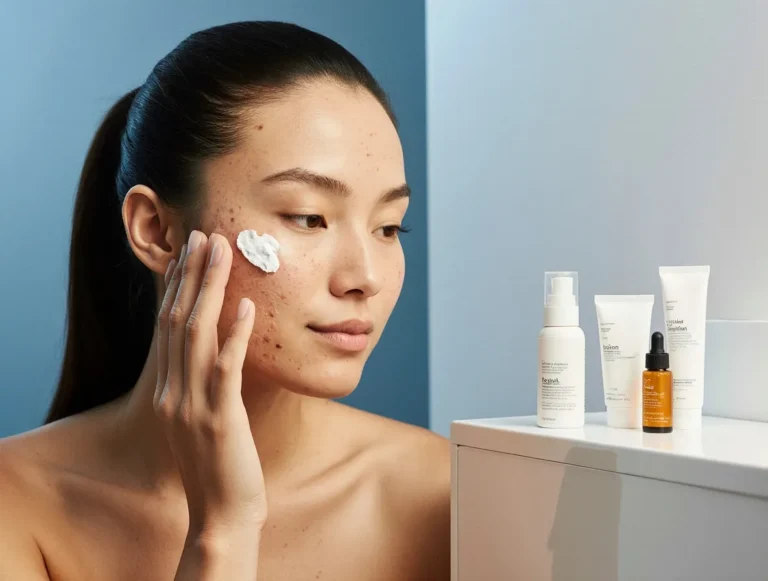
The safest way to evaluate a Neutrogena acne treatment is to keep the rest of the routine uncomplicated. Starting several medicated products together makes irritation more likely and makes it difficult to identify which product caused it.
Morning
- Cleanse gently. Use a plain cleanser or one salicylic acid cleanser if your skin tolerates it.
- Apply one selected Neutrogena acne treatment according to its Drug Facts label.
- Use a non-comedogenic moisturizer.
- Finish with broad-spectrum, water-resistant SPF 30 or higher sunscreen.
Evening
- Remove makeup and sunscreen without scrubbing.
- Cleanse and pat the skin dry.
- Apply your selected leave-on treatment as directed.
- Add moisturizer if needed.
Do not assume that a salicylic acid wash, 10% benzoyl peroxide gel, adapalene, exfoliating toner, and scrub belong in the same beginner routine. One active used consistently is easier to assess than five products used irregularly.
If your Neutrogena acne treatment is adapalene, follow its once-daily directions. If you choose another product, follow that product’s label instead of borrowing instructions from a different acne medication.
How Long Should Treatment Take?
Some products may reduce surface oil or redness before they prevent new lesions. A fast cosmetic change is not the same as long-term acne control. The AAD advises that many acne treatments need about four to eight weeks before improvement becomes noticeable, and fuller clearing can take longer.
Adapalene’s label says it may take up to three months of daily use to see results. If a Neutrogena acne treatment causes severe irritation, do not continue simply to reach a timeline. Stop and seek medical advice. If an appropriate routine produces no improvement after the label-supported trial period, a dermatologist can reassess the diagnosis and treatment plan.
Safety, Allergic Reactions, and Benzoyl Peroxide Storage
Mild dryness, peeling, redness, or stinging can occur with salicylic acid, benzoyl peroxide, and adapalene. Severe swelling, hives, facial or throat tightness, faintness, or breathing difficulty is different. FDA has warned that rare serious hypersensitivity reactions can occur with some over-the-counter topical acne products. Stop the product and get emergency care for breathing trouble, throat swelling, faintness, or a rapidly worsening severe reaction.
In 2025, FDA tested 95 benzoyl peroxide acne products for benzene. More than 90% had undetectable or extremely low levels, while six had elevated levels; seven products were recalled after FDA or manufacturer testing. The Neutrogena acne treatment products discussed here were not named on that FDA recall page when this article was verified, but recall information can change.
The AAD currently advises storing benzoyl peroxide at room temperature or cooler, replacing it every 10 to 12 weeks, and discarding products exposed to temperatures above 78°F. Always check current FDA notices, the expiration date, and package instructions.
When to See a Dermatologist
Over-the-counter care is not the right endpoint for everyone. See a dermatologist for painful nodules or cysts, developing scars, rapidly worsening acne, significant distress, or breakouts that do not improve after consistent and appropriate treatment.
An examination is also valuable when bumps are intensely itchy, unusually uniform, or unlike blackheads and typical pimples. Folliculitis, rosacea, perioral dermatitis, and other conditions can resemble acne but may need different treatment. Switching to a stronger Neutrogena acne treatment will not correct the wrong diagnosis.
Frequently Asked Questions
Which Neutrogena Acne Treatment Is Best for Blackheads?
A 2% salicylic acid cleanser is the most direct match among the products reviewed because salicylic acid helps unclog pores. The classic Oil-Free Acne Wash, fragrance-free version, and cream cleanser all contain 2% salicylic acid. Sensitive or dry skin may need a gentler approach.
Can I Use a Neutrogena Salicylic Acid Cleanser With Benzoyl Peroxide?
Some people can tolerate both, but combining a salicylic acid Neutrogena acne treatment with benzoyl peroxide increases the potential for dryness and irritation. Introduce one active first and follow each label. Ask a pharmacist or dermatologist how to combine products if you have sensitive skin, eczema, prescription treatments, or persistent acne.
Is 10% Benzoyl Peroxide Better Than 2.5%?
Not automatically. The AAD recommends starting with 2.5% for adult acne when appropriate to reduce dryness, irritation, and burning. A 10% product is stronger, but greater irritation can make consistent use difficult. More medication also does not guarantee faster clearing.
How Long Does a Neutrogena Acne Treatment Take to Work?
The timeline depends on the active ingredient and acne type. Many acne treatments need four to eight weeks before noticeable improvement. Adapalene may take up to three months of once-daily use. Stop sooner and seek advice if irritation becomes severe or allergy symptoms develop.
Can Neutrogena Acne Products Make Breakouts Look Worse?
Dryness, peeling, and redness can make skin look worse even when the medication is not creating new acne. Adapalene users may also notice irritation early in treatment. Do not label every worsening as “purging.” Painful deterioration, severe irritation, or an unusual rash deserves professional evaluation.
Conclusion
The best Neutrogena acne treatment is the one whose active ingredient matches your acne and whose irritation level you can manage consistently. Salicylic acid suits clogged pores, benzoyl peroxide targets inflamed pimples, and adapalene focuses on recurring acne and prevention.
Choose one sensible starting product, read its current Drug Facts label, and build around it with gentle cleansing, moisturizer, and sunscreen. Speak with a dermatologist when acne is painful, scarring, persistent, or difficult to identify.
This article is educational and does not provide a diagnosis or replace care from a qualified healthcare professional.
References:
- American Academy of Dermatology Association. “Acne Clinical Guideline.”
- American Academy of Dermatology Association. “Adult Acne Treatment Dermatologists Recommend.”
- U.S. Food and Drug Administration. “Topical Acne Drug Products for Over-the-Counter Human Use.”
- DailyMed, National Library of Medicine. “Adapalene Gel 0.1% Drug Facts.”
- U.S. Food and Drug Administration. “Limited Number of Voluntary Recalls Initiated After FDA Testing of Acne Products for Benzene.”
- American Academy of Dermatology Association. “FAQs: Benzene in Acne Products Containing Benzoyl Peroxide.”
- U.S. Food and Drug Administration, Center for Drug Evaluation and Research. “Benzoyl Peroxide Safety and Hypersensitivity Review.”