Stress Acne Areas: Where Stress Breakouts Show Up and Why
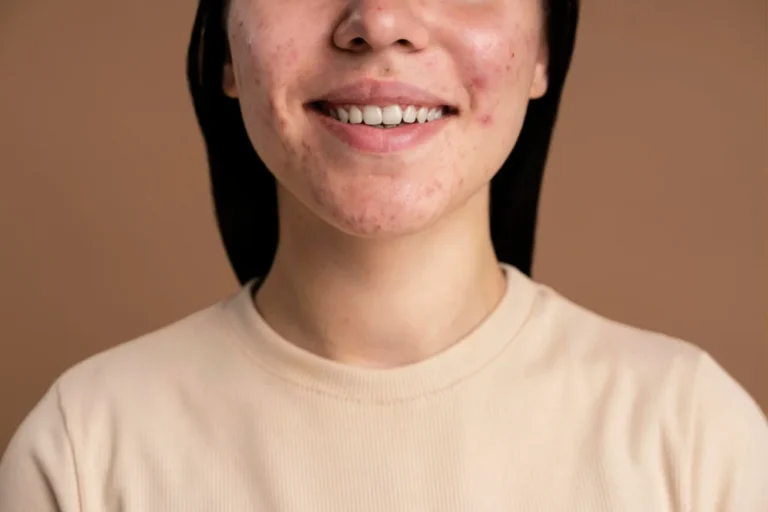
Stress breakouts can feel sudden. After a week of poor sleep, deadlines, or emotional strain, new pimples may appear in the places where your skin already tends to break out. The most common stress acne areas include the forehead, cheeks, chin, jawline, and sometimes the chest, shoulders, and back.
Stress does not create a unique acne map or directly cause acne on its own. Instead, it can make existing breakouts worse by increasing inflammation, affecting oil production, disrupting sleep, and encouraging habits such as face touching or skin picking. Below, you’ll learn what breakouts in each area may suggest and how to calm them without overwhelming your skin.
Table of Contents
A quick look at stress acne areas
Stress-related breakouts usually appear in areas that are already prone to acne, especially the forehead, cheeks, chin, jawline, and sometimes the chest, shoulders, and back. However, stress does not create a unique acne map, so location alone cannot confirm the cause. If your breakouts repeatedly worsen during poor sleep, deadlines, or emotional strain, stress may be one factor alongside hormones, sweat, friction, and skin care products.
Can stress cause acne?
Stress does not directly cause acne, but it can make existing acne worse or trigger more noticeable flare-ups in acne-prone skin. If you have wondered can stress cause acne, can stress cause pimples, or does stress give you pimples, the clearest answer is that stress can intensify breakouts rather than create acne on its own.
The American Academy of Dermatology notes that stress does not directly cause acne, but it may worsen existing acne as stress becomes more intense.
Researchers are still studying the exact link between stress and acne. Stress can affect hormone signaling, inflammation, sleep, and daily habits, which may worsen breakouts in skin that is already acne-prone. For some people, this can also mean more oil, redder pimples, and slower healing during stressful periods.
Stress can also change daily habits. You may sleep less, touch or pick your skin, leave sweat or makeup on longer, or become less consistent with your routine. For a deeper explanation of this connection, read our guide to whether stress can cause acne.
What are the most common stress acne areas?
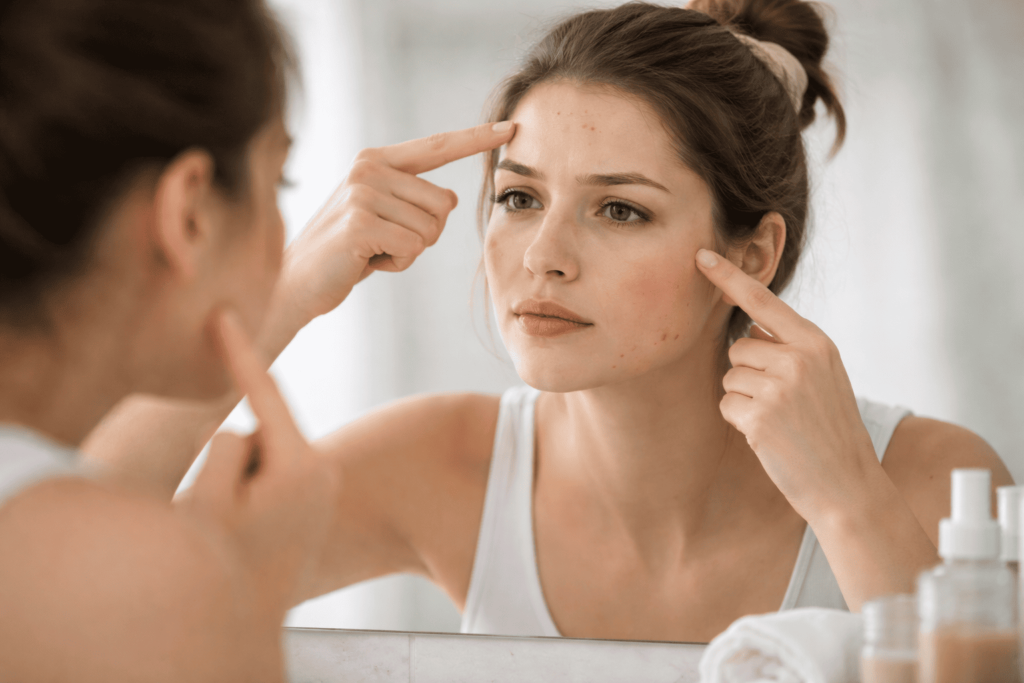
Forehead: one of the most common stress acne areas
The forehead is a common place for stress-related flare-ups because it already tends to be oilier and is frequently exposed to sweat, hair products, hats, bangs, and headbands. Stress may worsen existing acne, but the location itself does not prove the cause. If this area flares, check both recent stress and anything that regularly touches your forehead.
Between the brows and temples
The area between the eyebrows and around the temples can flare during busy or stressful periods, but oil, sunscreen, makeup, sweat, and hair products may also contribute. Glasses and resting your face in your hands can add friction. If these breakouts appear with forehead acne, look for a combination of stress, product buildup, and repeated contact.
Cheeks
Cheek breakouts may become more noticeable during stressful periods, but outside contact often matters too. Phone screens, makeup brushes, pillowcases, and resting your cheek on your hand can add friction or transfer oil. If your cheeks also feel tight, red, or sensitive, irritation or skin barrier damage may be contributing.
Chin and jawline
Breakouts on the chin and jawline often overlap with hormonal changes. Stress may make them appear more inflamed or more frequent, especially during poor sleep, emotional strain, or around the menstrual cycle. Because several triggers affect the lower face, location alone cannot confirm whether a breakout is hormonal or stress-related.
Around the mouth
The skin around the mouth may break out when stress leads to lip licking, picking, or frequent touching. Heavy or irritating products can also contribute. However, bumps in this area are not always acne; persistent redness, burning, or a rash-like pattern may point to perioral dermatitis and should be evaluated by a medical professional.
Chest, shoulders, and back
Stress-related breakouts can also affect the chest, shoulders, and back, especially because these areas contain many oil glands. Sweat, tight clothing, sports bras, backpacks, and delayed showers can add friction or trap moisture against the skin. If body breakouts keep returning, shower after sweating and choose loose, breathable clothing when possible.
Why Can Stress Worsen Breakouts in These Areas?
If you are asking, “Why does stress cause breakouts?” the more accurate explanation is that stress can worsen acne rather than create it on its own. Changes in inflammation, oil production, sleep, and daily habits can make existing clogged pores and pimples more noticeable during stressful periods.
Increased oil production
Stress may influence oil production in some people, but extra sebum alone does not automatically cause acne. Breakouts become more likely when oil mixes with dead skin cells and contributes to clogged pores, especially in naturally oily areas such as the forehead and nose.
More inflammation
Stress can raise inflammation throughout the body. In acne-prone skin, more inflammation can turn a small clogged pore into a larger red pimple.
Slower healing
During prolonged stress or poor sleep, the skin may take longer to recover from inflammation. Pimples can remain visible for longer, while touching or picking them increases the risk of lingering marks. Keeping your routine gentle and consistent supports healing better than adding several strong products.
Stress-related habits
A stressful week can quietly disrupt your routine. You may cleanse later, wear sweaty clothing for longer, or use treatments less consistently. These changes can contribute to flare-ups, so focus on a few simple skin care steps you can maintain even when life becomes busy.
Face touching and picking
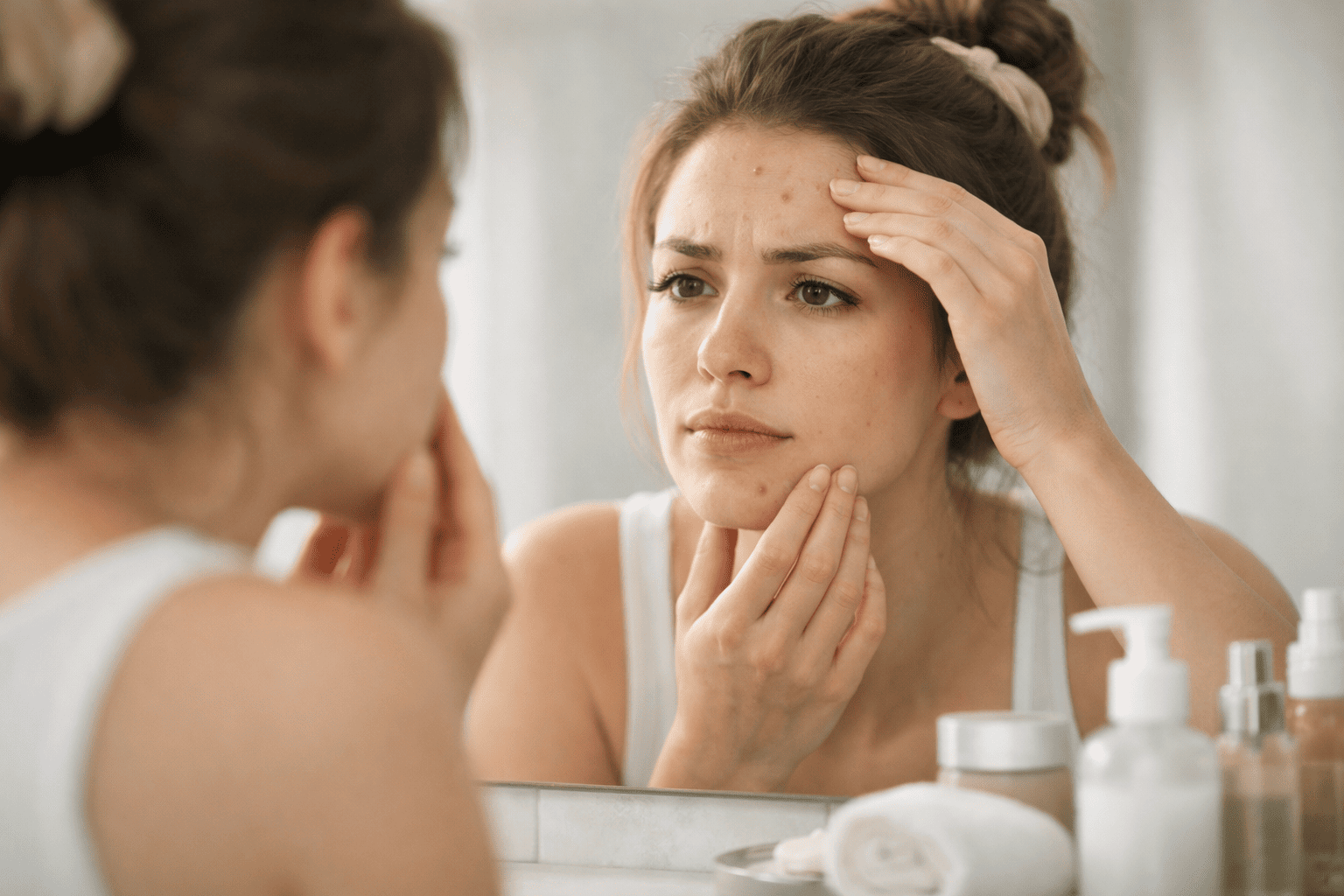
Many people touch their face more when they feel anxious, distracted, or overwhelmed. Repeated touching can irritate already inflamed skin, while picking can delay healing and increase the risk of dark marks or scars. Keeping your hands away from active pimples is one of the simplest ways to prevent a small breakout from becoming worse.
Stress acne or something else?
Not every bump that appears during a stressful period is acne. Pay attention to how the bumps look and feel, when they appeared, and whether you recently changed any skin care or hair products. Conditions such as folliculitis, rosacea, perioral dermatitis, and irritation can sometimes resemble a breakout but may require a different approach.
How stress breakouts can look
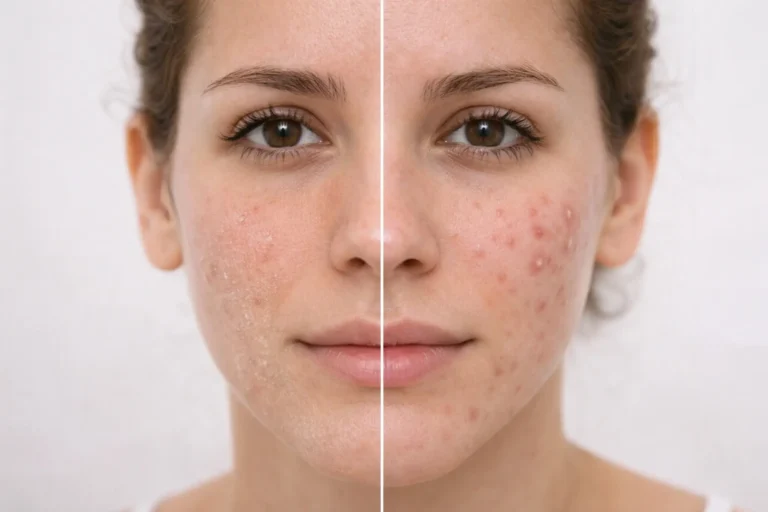
Breakouts linked to stress may include:
- Small clogged bumps
- Whiteheads
- Blackheads
- Red inflamed pimples
- Tender deeper bumps
These breakouts may become more noticeable during hard weeks, poor sleep, travel, or emotionally draining periods. However, timing alone does not prove that stress is the cause, so also consider recent changes in your routine, products, hormones, sweating, and skin-picking habits.
Stress acne vs hormonal acne
Stress-related breakouts and hormonal acne can overlap, especially on the chin and jawline. Hormonal acne is more likely to follow a repeating pattern and often centers on the lower face, while a stress-related flare may appear in several places and line up with poor sleep or emotional strain. Because both can happen at the same time, breakout location should be treated as a clue rather than a diagnosis.
Stress acne vs clogged pores
Sometimes a stress-related flare looks more like congestion than inflamed acne. Clogged pores are usually small, flesh-colored, and less red than inflammatory pimples. Stress may make them more noticeable by affecting oil production and skin recovery, but heavy products and inconsistent cleansing can also contribute.
When it may be something else
Acne-like bumps may sometimes be another skin condition, such as:
- Folliculitis
- Rosacea
- Perioral dermatitis
- Irritation from harsh products
If your skin burns, stings, or becomes suddenly very red, acne may not be the whole story.
What Stress Acne Areas Can—and Cannot—Tell You
Breakout location can offer useful clues, but it cannot confirm that stress is the cause. Forehead acne may also involve oil, sweat, or hair products; cheek breakouts can be affected by friction and contact; chin and jawline acne may overlap with hormonal changes; and body acne can worsen when sweat stays trapped under tight clothing. Instead of relying only on an acne face map, look at timing, sleep, stress levels, products, menstrual cycle if relevant, and daily habits to understand what may be triggering your skin.
How to treat stress acne at home
If you are searching for how to treat stress acne, the best approach is usually simple and consistent. Starting several new products at the same time can irritate your skin, make breakouts look worse, and prevent you from knowing which treatment is actually helping.
Keep your routine simple
A basic routine should include:
- A gentle cleanser
- One acne treatment
- A lightweight moisturizer
- Broad-spectrum sunscreen during the day
This simple routine can help control breakouts without overwhelming your skin or making it harder to identify irritation.
Best cleanser choices
Choose a cleanser that removes sweat, oil, and sunscreen without leaving your skin stripped. If your skin is very oily, a cleanser with salicylic acid may help. If your skin feels sensitive, start with a gentle non-medicated cleanser.
🧴 Gentle Cleanser Pick
If your skin feels tight or easily irritated during a breakout, Vanicream Gentle Facial Cleanser can help keep your routine simple. This fragrance-free, non-comedogenic cleanser removes excess oil and daily buildup without adding another acne active.
👉 Check Vanicream Gentle Facial Cleanser on Amazon
Helpful acne ingredients
Different ingredients can help different kinds of breakouts in stress acne areas:
- Salicylic acid for clogged pores and excess oil
- Benzoyl peroxide for red inflamed pimples
- Niacinamide for redness and skin barrier support
- Adapalene for preventing clogged pores over time
Choose one active ingredient based on the type of breakout you have and follow the product label. Start slowly, use a moisturizer, and avoid layering several strong acne treatments on the same area until you know how your skin responds. Stop using the product and seek medical advice if you develop severe burning, swelling, blistering, or a spreading rash.
🎯 One Active for Recurring Breakouts
If clogged pores and recurring breakouts are your main concern, Differin Gel contains 0.1% adapalene—the retinoid mentioned above. The label directs adults and children 12 and older to apply a thin layer once daily to the entire affected area, not just individual pimples. Use moisturizer and sunscreen, and ask a doctor before use if you are pregnant or breastfeeding.
👉 Check Differin Gel 0.1% Adapalene on Amazon
Why moisturizer helps
A lot of people think oily skin does not need moisturizer. That is not true. A non-comedogenic moisturizer can help protect your skin barrier and make acne treatment easier to tolerate.
Why sunscreen matters
Sunscreen helps protect the skin, especially if you are using active treatments. It also helps prevent marks left behind in stress acne areas from getting darker.
Best treatment options by breakout type
Different types of pimples in stress acne areas may respond better to different first steps.
| Breakout type | What it looks like | Helpful first step |
|---|---|---|
| Small clogged bumps | Tiny rough or flesh-colored bumps | Salicylic acid or adapalene |
| Red inflamed pimples | Swollen, tender, red spots | Benzoyl peroxide spot treatment or wash |
| Deep painful breakouts | Large sore bumps under the skin | Gentle care, avoid picking, consider professional help |
| Post-acne marks | Flat dark or red marks after pimples heal | Sunscreen, time, and gentle brightening care |
If your acne is mild, you may notice improvement within a few weeks. Deeper breakouts in stress acne areas often take longer.
Stress management habits that may help your skin
Skin care matters, but so do the habits around it. If you want calmer stress acne areas, it helps to lower the things that keep feeding the flare.
Better sleep
Lack of sleep can raise stress hormones and make inflammation worse. Better sleep may help your skin recover more steadily.
Exercise and showering after sweat
Exercise can help manage stress, which is good for your body and may help your skin too. Just make sure sweat does not sit too long on stress acne areas, especially on the chest, shoulders, and back.
Food habits
There is no one diet that clears acne for everyone. Still, regular meals, hydration, and fewer stress-driven eating swings may help some people feel more balanced overall.
Reducing face touching and picking
Try these habits:
- Keep pimple patches nearby
- Tie back hair
- Clean your phone screen often
- Change pillowcases regularly
- Keep your hands busy if you tend to pick
These small changes can protect stress acne areas more than most people realize.
🩹 Hands-Off Help for Visible Whiteheads
If stress makes you pick at pimples, Mighty Patch Original creates a hydrocolloid barrier over a visible whitehead, helping absorb fluid while keeping your fingers away. It is drug-free, making it a simple option when you want to protect one surface-level pimple without adding another acne active.
👉 Check Mighty Patch Original on Amazon
Comparison table: Stress acne vs hormonal acne vs irritation breakouts
This comparison can help you sort out what may be happening in your stress acne areas.
| Type | Main causes | Usual locations | Typical appearance | Best first-step treatment approach | When professional care may help |
|---|---|---|---|---|---|
| Stress acne | Cortisol, oil, inflammation, poor sleep, picking | Forehead, cheeks, chin, jawline, body | Mixed breakouts during stressful periods | Gentle routine, one acne treatment, stress support | If repeated flares, scarring, or no improvement |
| Hormonal acne | Hormone changes, cycle-related shifts, androgen activity | Chin, jawline, lower cheeks | Deeper tender bumps, often recurring | Acne routine plus medical evaluation if ongoing | If breakouts are painful or cycle-linked |
| Irritation breakouts | Harsh products, friction, barrier damage | Anywhere exposed to trigger | Redness, burning, rash-like bumps | Stop irritating products and simplify skin care | If rash persists or diagnosis is unclear |
Mistakes that can make stress acne worse
When breakouts show up, it is easy to do too much. But many common reactions make stress acne areas worse instead of better.
Overwashing and harsh scrubs
Scrubbing can irritate the skin and make pimples look angrier. It can also damage the skin barrier.
Using too many strong products
Too many acids, masks, spot treatments, and retinoids at once can leave stress acne areas red, dry, and more inflamed.
Picking and popping
Picking can make pimples last longer and leave marks behind. It is one of the fastest ways to turn small breakouts into more obvious ones.
Skipping moisturizer
When you skip moisturizer, your skin may become irritated and less able to handle acne treatment.
Changing products too quickly
Most acne treatments need time. Switching products every few days makes it hard to know what is helping your stress acne areas and what is not.
When home care may not be enough
Sometimes home care works. Sometimes it does not. If stress acne areas keep flaring or are leaving marks, professional evaluation may be worth it.
Signs you may need medical help
Consider seeing a dermatologist or qualified medical professional if:
- You have deep, painful bumps
- Acne is leaving scars
- Breakouts are widespread
- Over-the-counter products have not helped after 8 to 12 weeks
- You are not sure whether it is acne or another skin condition
When repeated stress flares keep happening
If the same stress acne areas flare again and again, it may help to address both the acne and the stress pattern behind it. That can mean skin treatment plus help with sleep, anxiety, or burnout.
What a dermatologist may recommend
A dermatologist may suggest prescription topicals, stronger retinoids, hormonal treatment in some cases, oral medication, or other targeted options based on your skin and medical history.
Practical next steps for calmer skin
You do not need a perfect routine. You need one you can actually follow when life gets busy and your stress acne areas start acting up.
A simple 2-week reset plan
Try this basic plan:
- Wash with a gentle cleanser morning and night
- Use one acne treatment only
- Apply a lightweight moisturizer
- Wear sunscreen every morning
- Avoid picking
- Shower soon after sweating
- Aim for steadier sleep
Use these two weeks to simplify your routine and watch for irritation, not to judge the final result of an acne treatment. Many treatments need several weeks of consistent use before improvement becomes noticeable. If your skin becomes increasingly painful, irritated, or starts scarring, contact a dermatologist rather than adding more products.
What to track
If your breakouts keep returning, track:
- Stress level
- Sleep
- Menstrual cycle, if relevant
- New skin care products
- Hair products
- Exercise and sweating
- Picking habits
- Diet changes
Tracking can help you see patterns in your stress acne areas that are easy to miss day to day.
Conclusion
Stress acne areas are not a separate type of acne or a reliable face map. They are places where existing acne may become more noticeable during stressful periods, commonly including the forehead, cheeks, chin, jawline, chest, shoulders, and back. Pay attention to timing as well as sleep, sweat, friction, hormones, and the products touching your skin.
Start with a gentle cleanser, one appropriate acne treatment, a non-comedogenic moisturizer, and daily sunscreen. Avoid picking, give your routine several weeks to work, and contact a dermatologist if the breakouts become deep, painful, widespread, or begin leaving scars.
FAQ
Can stress acne areas appear overnight?
They can seem to appear overnight, but the process usually starts earlier. Stress can increase oil, inflammation, sweat, and skin picking, which may turn clogged pores in stress acne areas into visible pimples within a few days.
How long do stress acne areas usually take to calm down?
An individual pimple may begin to settle within several days, but a consistent acne routine usually needs several weeks before you can judge the overall result. Give one well-tolerated treatment time to work, and seek professional advice if breakouts are deep, painful, scarring, or have not improved after 8 to 12 weeks.
Are stress acne areas the same as hormonal acne areas?
Not exactly. Stress acne areas can include the forehead, cheeks, chin, jawline, and body, while hormonal acne is more likely to center on the lower face, especially the chin and jawline.
What is the safest way to treat stress acne areas at home?
Use a gentle cleanser, one proven acne treatment such as salicylic acid, benzoyl peroxide, or adapalene, a lightweight moisturizer, and daily sunscreen. Avoid scrubbing, over-treating, and picking your skin.
When should you see a doctor about stress acne areas?
It is a good idea to get medical help if stress acne areas become painful, deep, widespread, leave scars, or do not improve after 8 to 12 weeks of over-the-counter care.