Subcision for Acne Scars: When Microneedling May Not Be Enough
If you have tried microneedling but still see broad dents across your cheeks, the issue may not be a lack of collagen alone. Some depressed acne scars are held down by fibrous tissue beneath the skin. Subcision for acne scars addresses that attachment, while microneedling mainly encourages the skin to remodel itself. Understanding the distinction can make your next dermatology consultation much more useful.
Quick answer: Subcision may help selected rolling acne scars that are tethered to deeper tissue. A dermatologist releases the attachments responsible for pulling some scars downward. Microneedling stimulates collagen but may not adequately correct persistent tethering. Neither procedure works for every scar, and limited improvement after microneedling does not, by itself, prove you need subcision.
Deciding whether to pursue subcision for acne scars depends on scar shape, clinical examination, previous treatments, health history, and the risks you are willing to accept.
Table of Contents
What Is Subcision for Acne Scars and How Does It Work?
Subcision is a minor surgical procedure performed by a qualified clinician to release selected fibrous attachments beneath a depressed scar. Instead of treating only the surface, it addresses tissue that may be pulling the skin inward. Healing afterward can also contribute to changes in the supporting tissue. These mechanisms may make an appropriate scar less noticeable, not erase it completely.
Understanding Tethered Rolling Scars
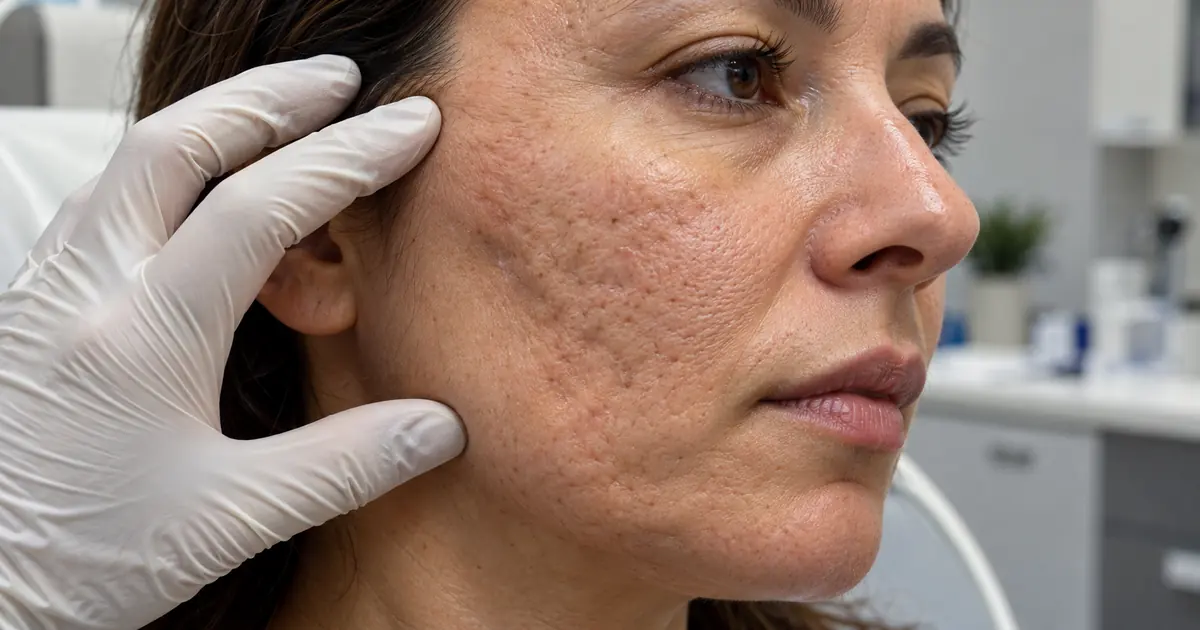
Rolling scars often create broad, gently sloping depressions that give the skin a wavy appearance. Some are tethered by scar tissue connecting the surface to deeper layers. That attachment can prevent the area from rising naturally even as nearby skin changes.
A rolling appearance alone does not establish whether subcision for acne scars is appropriate: it is a clue, not a diagnosis of tethering. Volume loss, mixed scar types, and the natural contours of the face also influence appearance. Two people with similarly shaped dents may need different treatments.
Why Releasing Tissue Is Different From Remodeling It
The goal of subcision for acne scars is targeted physical release of scar attachments. Professional microneedling, by contrast, creates controlled tiny injuries that encourage collagen and elastin production during healing. Radiofrequency microneedling adds energy to that remodeling process.
Microneedling can improve several depressed scar patterns and is not merely a superficial beauty treatment. But it is not designed specifically to free a broad, tightly bound depression. A clinician may therefore discuss subcision when tethering appears to be an important cause of the remaining contour problem.
When Subcision for Acne Scars May Help More Than Microneedling
Considering subcision for acne scars after disappointing microneedling results should start with reassessment, not an automatic booking. It may reflect insufficient treatment, a scar type less suited to that approach, unrealistic expectations, or substantial tethering that needs separate attention.
Persistent Rolling Scars After Microneedling
Imagine a cheek with both fine surface irregularities and a few wider hollows. Microneedling might soften some surface texture while the broader hollows remain. If an examination finds firm attachments beneath those depressions, release may be worth discussing. If the hollows mainly reflect volume loss, the plan could be different.
That is the practical reason to consider subcision for acne scars: it targets a specific structural problem, rather than serving as the next mandatory stage for anyone who has completed several microneedling sessions.
How Dermatologists Assess Possible Tethering
A dermatologist typically reviews your acne history and prior scar procedures, then examines individual scars under appropriate lighting. Scar shape, depth, location, surrounding skin mobility, and findings during gentle clinical examination all matter. The clinician may also assess how a depression changes with skin movement or stretching.
Neither a selfie nor an at-home stretching test reliably establishes who will benefit. Mixed scarring is common, and areas near important nerves and blood vessels require careful planning. For broader guidance, see how dermatologists evaluate different acne scar types.
When Microneedling Still Makes Sense
For selected shallow or widespread atrophic scars, professional microneedling may remain a reasonable option, especially when tethering is not prominent. Radiofrequency microneedling is another approach that can help remodel texture. An incomplete response does not make earlier treatment pointless or establish that subcision for acne scars is the right next step.
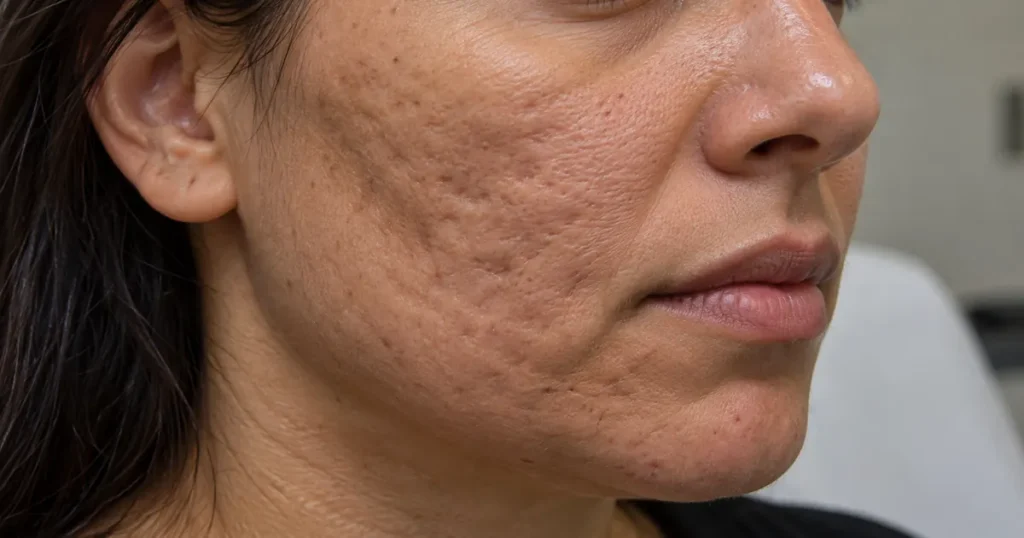
Subcision for Acne Scars vs Microneedling: Key Differences
Both treatments aim to improve the appearance of acne scars, but the main mechanism and recovery experience differ.
| Decision factor | Subcision | Professional microneedling |
|---|---|---|
| Main target | Selected fibrous attachments beneath depressed scars | Collagen remodeling in treated scarred skin |
| Common use | Tethered rolling or other suitable bound-down scars | Selected atrophic scars and broader texture concerns |
| Typical anesthesia | Local anesthetic | Often topical numbing, depending on treatment |
| Common short-term effects | Bruising, swelling, tenderness | Redness, sensitivity, possible swelling |
| Treatment course | One or multiple visits depending on response | Often a series of sessions |
| Complete scar removal guaranteed? | No | No |
Does One Always Work Better?
No. A treatment can be more appropriate for one scar mechanism without being superior for every person. Research comparing acne-scar procedures has different devices, scar mixtures, outcome scales, and follow-up periods. A September 2026 evidence review found that the available randomized comparisons were too sparse and uncertain to support a dependable overall treatment ranking.
Comparing subcision for acne scars with microneedling therefore requires a scar-specific conversation. The right question is not simply which produces a better online photograph, but which feature of your examined scars each procedure would address.
Can Both Be Useful?
Yes, sometimes. If one area has bound-down rolling scars and surrounding textural changes, a dermatologist may consider release for the tethered areas and another treatment for the remaining texture. That does not mean both are necessary, should occur on the same day, or will always outperform a single procedure.
Which Acne Scars Are Unsuitable for Subcision?
Subcision for acne scars is not a general solution for every mark left by a breakout. Scar classification is essential because different appearances have different underlying problems.
Deep Ice-Pick Scars
These are narrow, deep pits that generally do not respond well to standard subcision alone. A dermatologist may discuss focal techniques such as TCA CROSS or punch-based procedures instead. A mixed scar pattern can still contain separate rolling depressions that deserve assessment.
Raised Scars and Keloids
Hypertrophic and keloid scars extend above the surrounding skin, making them a different treatment problem. A history of abnormal raised scarring may also affect whether subcision is suitable. Management may involve injections or other dermatologist-directed approaches rather than releasing tissue beneath a depression.
Flat Brown or Red Post-Acne Marks
Flat discoloration is not the same as a contour depression. Subcision does not target the excess pigment or persistent redness responsible for these marks. Sunscreen, suitable topical care, or other assessment may be more relevant, depending on the cause.
For a wider view of available professional treatments for acne scars, compare options by scar type instead of choosing a procedure from its name.
When Medical Risks Change the Decision
Active skin infection, bleeding or clotting disorders, medicines that affect bleeding, and a history of keloids can change the risk assessment. Current or recent isotretinoin use also needs disclosure. Older recommendations imposed long waiting periods for many procedures, but more recent consensus statements challenge blanket delays for several treatments. There is no safe universal waiting rule for subcision that replaces an individualized clinician decision. Never stop prescribed medicines on your own before a cosmetic procedure.
What Happens During a Professional Subcision Procedure?
A consultation should come before the treatment itself. The dermatologist identifies which scars are potentially suitable, explains alternatives, and reviews your medical history, medications, skin tone, and previous responses. Ask how the practitioner handles bruising, complications, and follow-up.
Before the Appointment
The clinician may document scar depth and location using standardized photographs. Discuss any active acne, cold sores or other infections, prior abnormal healing, allergies, and medications or supplements that could affect bleeding. Your clinician should give individualized preparation instructions rather than expecting you to modify medications yourself.
During Treatment
Subcision for acne scars is usually performed in a medical setting with local anesthesia. After preparing the area, a trained clinician uses an appropriate sterile instrument beneath selected scars to release fibrous attachments. The precise method depends on the anatomy and the practitioner’s judgment; this is not a procedure to attempt at home.
You may feel pressure or movement even when the area is numb. If you experience significant pain, tell the clinician rather than assuming you must tolerate it.
Immediately Afterward
The clinic may apply pressure, cold therapy, or a dressing as appropriate. You should receive instructions on cleaning the area, managing discomfort, activity restrictions, sun protection, and when to contact the office. Plan for visible changes rather than expecting to leave with a final result.
Subcision for Acne Scars: Bruising, Recovery, and Possible Risks
Because subcision disturbs tissue under the skin, short-term bruising and swelling can be more noticeable than after many standard microneedling sessions. The amount and duration vary with the area, treatment extent, individual healing, and technique. Do not rely on a single fixed number of downtime days when planning a public event.
Common Short-Term Effects
- Bruising or localized discoloration.
- Swelling and tenderness.
- Temporary firmness or small areas of unevenness.
- Mild discomfort around treated sites.
After subcision for acne scars, bruising can initially make the skin look more uneven. Early swelling can also make depressed scars appear temporarily lifted, so photographs taken immediately after treatment are not reliable evidence of lasting improvement.
Less Common but Important Complications
Potential complications include hematoma (a collection of blood), infection, persistent lumps or nodules, temporary or lasting pigmentation changes, unwanted scarring, and injury to nerves or blood vessels. A 2025 clinical review identifies tenderness, bruising, infection, subcutaneous lumps, and pigment changes as important reported problems. Complication risk varies by technique and patient; a reliable personal percentage cannot be inferred from the available studies.
For subcision for acne scars, provider training and knowledge of facial anatomy matter. Ask about the specific risks at your treatment location, not just general statements that the procedure is minimally invasive.
Recovery and Warning Signs
Follow the clinic’s instructions closely. Contact the treating clinician if redness, warmth, swelling, or pain increases instead of improving, if you notice discharge or fever, or if a lump persists or becomes more painful. Rapidly expanding swelling, severe pain, or new significant weakness or sensory changes warrant urgent assessment.
Do not massage or aggressively treat the area, restart exfoliating products, or schedule another procedure without the clinician’s approval. The best aftercare is specific to what was done.
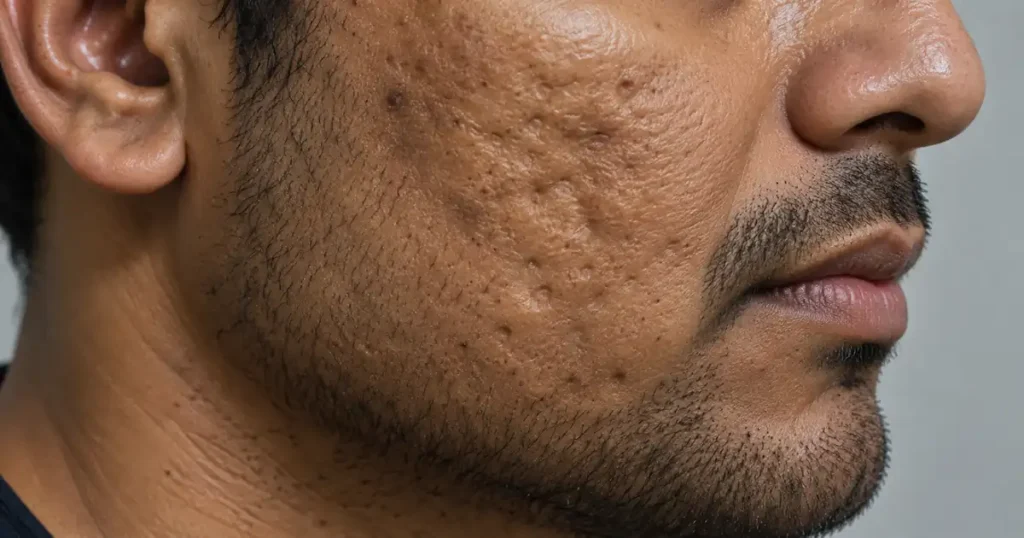
Combining Subcision With Other Scar Treatments
Some patients have mixed scarring: one scar is anchored, another has sharp edges, and another looks shallow but broad. This is one reason a dermatologist may offer more than one approach, either in stages or within a coordinated plan.
Subcision Plus Microneedling
A small randomized split-face study involving 25 participants compared fractional microneedle radiofrequency on both sides of the face with additional subcision on one side. The combined-treatment side showed greater improvement on clinician assessment. This supports further investigation, not a guarantee that every patient should receive both procedures or that the finding applies identically to standard microneedling.
The evidence is limited by sample size, selected participants, and treatment differences. The September 2026 review likewise cautioned against confidently ranking treatments across different scar patterns. A consultation should focus on the reason for combining them and the extra recovery burden.
Fillers, Laser Resurfacing, and Other Options
Fillers may add volume under selected depressed scars. Fractional lasers may improve surrounding texture by stimulating remodeling. Narrow ice-pick scars sometimes require targeted methods rather than broad resurfacing alone. These procedures carry their own indications, costs, healing expectations, and skin-tone considerations.
If laser resurfacing is being discussed as part of your plan, review the factors affecting laser treatment costs before comparing quotes. Ask for a written explanation of what each recommended treatment is meant to accomplish.
Why Sequence Must Be Individualized
There is no universal order or waiting interval that fits every combination. The clinician needs to consider inflammation, healing, infection risk, scar type, prior procedures, and the specific equipment used. A staged plan may also help identify which treatment actually contributed to improvement.
What Results Can You Realistically Expect?
The goal of subcision for acne scars is to make selected depressions less noticeable, not promise perfectly smooth skin. Improvement varies with how much tethering exists, the scar’s age and depth, associated volume loss, the chosen approach, and individual healing. Multiple sessions or additional treatments may be suggested, but not every scar needs repeated release.
Some attachment may remain or reform as tissue heals. Other untreated scar types can continue to affect the overall appearance. Judge the result after swelling and bruising have settled and follow-up assessments are complete, rather than comparing an immediate post-procedure image with the original.
Darker skin tones require thoughtful planning because post-inflammatory pigment changes can follow skin injury. Professional microneedling and selected subcision techniques can be considered across skin tones, but neither is risk-free. Choose an experienced clinician who can explain pigmentation prevention and management for your skin.
A dermatologist can help you decide whether another session is likely to add value or whether a different method better addresses the remaining scar.
Questions to Ask a Dermatologist Before Choosing Treatment
If you are considering subcision for acne scars, use your consultation to get answers specific to the scars being treated:
- Which of my depressions appear tethered, and how did you assess them?
- Why would subcision be preferable to more microneedling for those particular scars?
- Which scars will not be treated by this procedure, and what alternatives are available?
- What risks matter most given my medications, skin tone, and healing history?
- What recovery, follow-up visits, total cost, and possible additional sessions should I plan for?
The answers should make the proposed treatment understandable even if you decide not to proceed.
Frequently Asked Questions
1. Can Subcision Help One Isolated Rolling Acne Scar?
Possibly. A single scar may be suitable if a dermatologist finds an attachment that could be released and the expected benefit outweighs the risks. Its location, depth, and neighboring anatomy matter more than the number of scars. A broad depression caused mainly by volume loss may need another approach.
2. How Many Subcision Sessions Are Usually Needed?
There is no fixed number. Some selected scars may improve after one visit, while other scars need reassessment and more treatment. The clinician should explain how improvement will be measured and why any additional session is recommended, rather than selling a guaranteed package.
3. Does Subcision Hurt if Local Anesthesia Is Used?
Local anesthesia is intended to reduce pain during the procedure. You may still notice pressure or movement, and tenderness can follow after the anesthetic wears off. Tell the clinician if the numbing is inadequate and ask about the expected recovery before consenting.
4. Is Subcision Appropriate for Darker Skin Tones?
It may be, but skin tone is only one part of the decision. Post-inflammatory hyperpigmentation and other healing changes are possible after procedural injury. An experienced dermatologist can assess individual risk, discuss suitable technique and aftercare, and compare subcision with alternative treatments.
5. Can an Acne Scar Become Depressed Again After Subcision?
Yes. Improvement may be incomplete, and tethering or depression can remain or recur. Other factors such as volume loss or an untreated neighboring scar can also make the area look indented. Follow-up assessment is more informative than assuming that every returning shadow means the procedure failed.
Conclusion
Subcision for acne scars is most worth discussing when a dermatologist suspects that selected rolling depressions are held down by fibrous tissue. Microneedling can improve texture, but it does not necessarily correct that particular attachment. The best next step is a scar-specific consultation that explains what will be treated, the risks, the realistic improvement, and whether any additional procedure is necessary.
Medical disclaimer: This article is educational information, not a diagnosis or a substitute for care from a qualified healthcare professional. Decisions about scar procedures, medications, and recovery require an individual clinical assessment.
References:
1. American Academy of Dermatology — Acne Scars: Consultation and Treatment
2. American Academy of Dermatology — Microneedling Can Fade Scars, Uneven Skin Tone, and More
3. American Academy of Dermatology — Acne Scars: Signs and Symptoms
5. Sun C, Lim D. — Complications of Subcision for Acne Scarring (2025)
6. Gupta A, et al. — Evidence-based Surgical Management of Post-acne Scarring in Skin of Color (2020)
8. Liu Y, Zhang Z, Zhao J. — Minimally Invasive Interventions for Atrophic Acne Scars (2026)
9. Spring LK, et al. — Isotretinoin and Timing of Procedural Interventions (2017)