Can Stress Cause Acne? What the Skin-Stress Connection Really Means
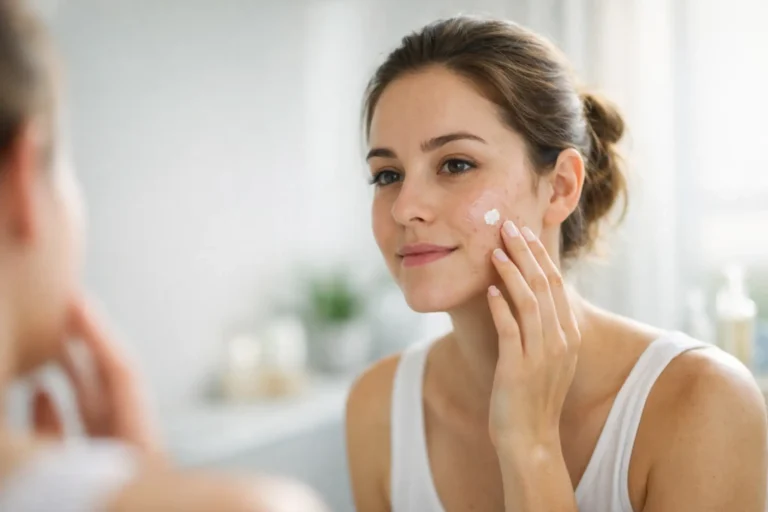
You finally get through a hard week, look in the mirror, and there it is: a fresh breakout you did not ask for. If that timing feels a little too familiar, you are not imagining things. Your skin and your stress levels can affect each other more than most people realize.
Yes, can stress cause acne is a fair and important question. Stress can trigger new breakouts in some people and make existing acne worse in others. It does not always work alone, but it can increase oil production, inflammation, and habits like poor sleep or skin picking that make pimples more likely.
Table of Contents
What happens to your skin when you are stressed?
When you are under stress, your body releases stress hormones, including cortisol. These hormones help you respond to pressure, but they can also affect your skin. In some people, stress increases oil production, makes inflammation worse, and slows the skin’s ability to recover.
That matters because acne develops when pores become clogged with oil, dead skin cells, and bacteria. If stress pushes your skin to make more oil and become more inflamed, breakouts can become easier to trigger and harder to calm down.
Stress can also affect your skin in less direct ways. You may sleep less, eat differently, skip your usual routine, sweat more, touch your face more often, or pick at bumps that would have healed faster if left alone. All of those things can make acne look more active.
So stress is not always the only reason you break out, but it can be a real part of the problem.
🔥 The 3 products dermatologists actually recommend (and yes, they work):
Stop guessing and start with what’s proven. La Roche-Posay Effaclar Duo(+) targets breakouts fast, Paula’s Choice 2% BHA Liquid Exfoliant keeps pores clear with daily use, and Hero Cosmetics Mighty Patch is the overnight fix everyone swears by. ✅ No prescription needed ✅ Affordable ✅ Backed by real clinical evidence.
Can stress cause acne or just make acne worse?
The short medical answer
The honest answer is both. Stress can worsen acne you already have, and it can also help trigger new pimples if your skin is already acne-prone or easily irritated.
A helpful way to think about it is this: stress may not create acne completely out of nowhere for everyone, but it can push your skin in the wrong direction. In that sense, stress often acts like a trigger rather than a single root cause.
Why the answer is different for each person
Not everyone breaks out under stress. Your personal response depends on several things:
- Your skin type
- Your hormone patterns
- Your family history of acne
- Whether you already have clogged pores
- Your sleep, diet, and skincare habits
- Whether you tend to touch or pick at your skin
For example, someone with oily, acne-prone skin may notice breakouts during exams, travel, or work stress. Someone with drier skin may get fewer pimples but still notice irritation, redness, or texture changes when life feels overwhelming.
That is why one person can go through a stressful month with clear skin, while another gets a cluster of inflamed pimples on the chin, jawline, or forehead.
Can stress cause pimples and what do stress breakouts look like?
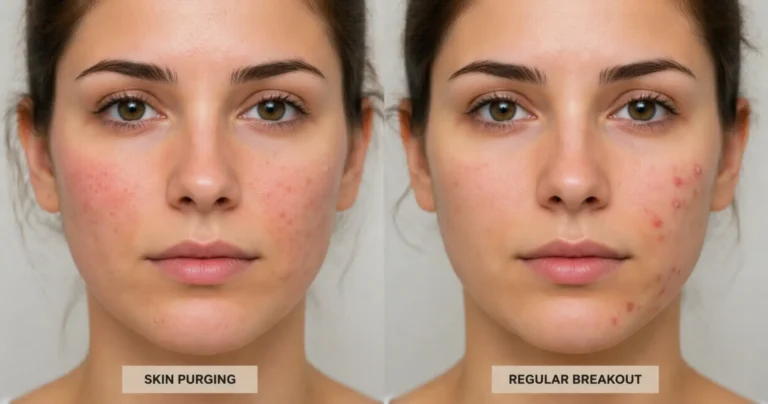
Yes, can stress cause pimples is another question with a real-world answer: it can. Stress breakouts often look similar to regular acne, which is why they can be hard to identify with certainty.
Common signs of stress-related breakouts
Stress-related breakouts often show up as:
- Red, inflamed pimples
- Small clogged bumps
- Tender spots under the skin
- Flare-ups that seem to appear during emotionally intense periods
- Breakouts that worsen when you are sleeping badly or skipping your routine
Many people notice these breakouts during deadlines, family stress, lack of sleep, moving, traveling, or after long periods of worry. The pattern matters. If your skin gets worse every time your stress goes up, that is a strong clue.
Stress acne vs regular acne
There is a lot of overlap between stress acne and other forms of acne. Stress acne is not a separate medical disease with one exact appearance. It is more like a breakout pattern linked to your stress response.
Here is a simple comparison:
| Type | Common Clues | Usual Pattern | What Often Helps |
|---|---|---|---|
| Stress acne | Flares during high-pressure periods, poor sleep, or emotional strain | May appear suddenly and look more inflamed | Gentle routine, acne treatment, better sleep, stress management |
| Hormonal acne | Often deeper, more tender bumps | Common around the chin, jawline, and around menstrual changes | Retinoids, benzoyl peroxide, sometimes hormonal treatment |
| Product-related acne | Starts after using a new heavy or pore-clogging product | Often appears where product is applied | Stop the product, simplify routine, use non-comedogenic skincare |
If you are trying to sort this out, it may also help to read a guide on the difference between hormonal acne and fungal acne so you can better tell similar-looking skin problems apart.
Stress acne areas: where does it usually show up?
One of the most common searches on this topic is stress acne areas. People want to know if there is a typical place where stress breakouts appear.
Typical stress acne areas on the face and body
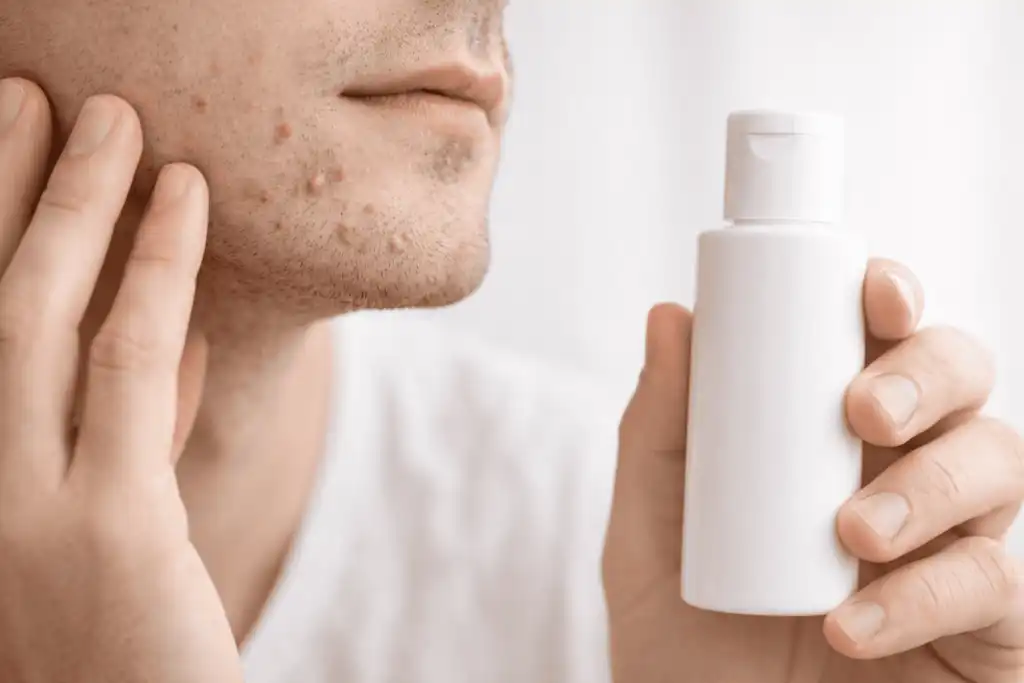
Stress-related breakouts can show up almost anywhere acne normally appears, but many people notice them in these spots:
- Forehead
- Cheeks
- Chin
- Jawline
- Around the mouth
- Sometimes the chest and back
The forehead may flare when sweat, hair products, hats, or face touching are part of the picture. The jawline and chin may break out when stress overlaps with hormone changes. The cheeks can be affected by phone contact, pillowcases, makeup, and friction.
Why breakouts may show up in different places
There is no perfect acne “map” that can diagnose the cause based only on location. Skin location can offer clues, but it is not exact science.
Different areas break out for different reasons, including:
- More oil production in certain zones
- Sweat trapped against the skin
- Friction from masks, helmets, or workout gear
- Touching your face when anxious or distracted
- Hair products getting onto the forehead
- Makeup or sunscreen that does not suit your skin
- Dirty makeup brushes, pillowcases, or phones
So when people ask about stress acne areas, the better answer is this: stress may influence where your breakouts show up, but your daily habits and skin type still matter a lot.
Does stress give you pimples overnight?
It can feel that way, but usually not truly overnight.
A pimple starts forming under the skin before you fully see it. Stress today may lead to changes in oil, inflammation, and skin behavior that become visible several days later. That is why a breakout may seem sudden even though the process began earlier.
Lack of sleep can speed up how “worn down” your skin looks. Picking at a small bump can turn it into a larger, angrier blemish much faster. So while stress may not create a pimple in a few hours, it can make a brewing breakout become obvious very quickly.
If you are wondering, does stress give you pimples instantly, the more accurate answer is that stress often helps set the stage, then the breakout becomes visible shortly after.
Who is more likely to get stress acne?
Stress acne can happen at any age, but some people seem more likely to deal with it.
Higher-risk groups include:
- Teens with naturally oilier skin
- Adults with a history of acne
- People going through hormonal shifts
- Students during exam periods
- Shift workers and people with poor sleep
- Caregivers under long-term pressure
- High-pressure professionals
- People who touch, rub, or pick at their skin when anxious
If you already have acne-prone skin, stress can be the thing that pushes a manageable situation into an obvious flare.
How to treat stress acne at home
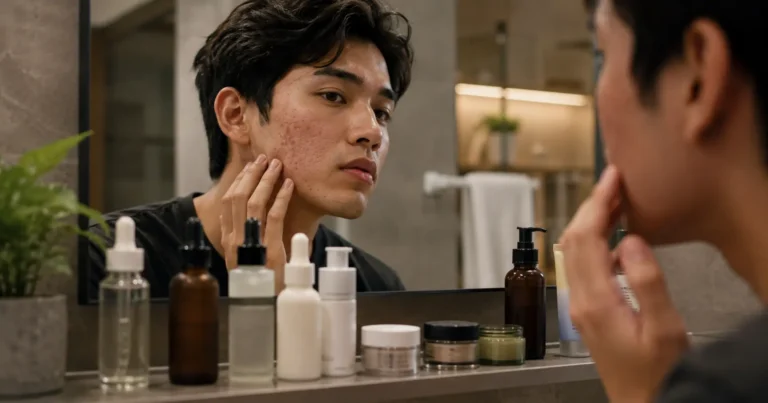
If you are searching for how to treat stress acne, the goal is not just to dry out your skin. The goal is to calm inflammation, unclog pores, protect your skin barrier, and reduce the habits that keep breakouts going.
Build a simple routine that protects the skin barrier
A simple routine usually works better than an aggressive one.
Start with these basics:
- Gentle cleanser twice a day
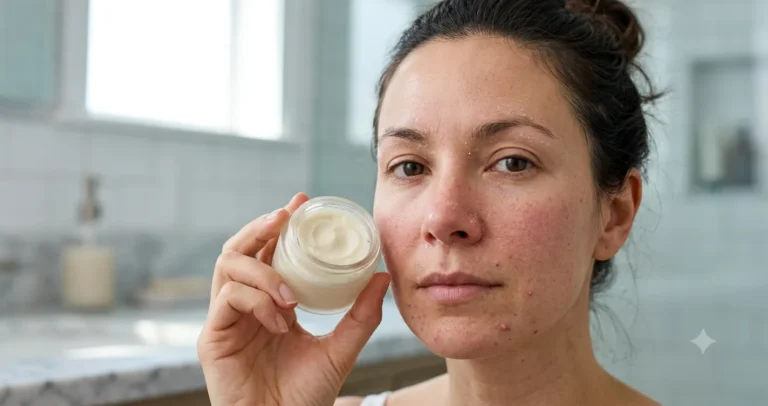
- Non-comedogenic moisturizer to support the skin barrier
- Broad-spectrum sunscreen every morning
- Targeted acne treatment based on your skin’s needs
Over-cleansing can backfire. Harsh scrubs, rough cleansing brushes, and alcohol-heavy products can leave your skin irritated and even more reactive.
If your skin already feels tight, stings, or flakes easily, you may benefit from learning how to repair a damaged skin barrier before adding multiple acne treatments at once.
Ingredients that may help stress breakouts
Some over-the-counter ingredients can be very useful for stress-related breakouts.
Benzoyl peroxide
This helps reduce acne-causing bacteria and calm inflamed pimples. It can be effective for red, angry breakouts, but it may also dry or irritate sensitive skin.
Salicylic acid
This ingredient helps unclog pores and can be especially helpful for blackheads, whiteheads, and small bumps. It often works well for oily or combination skin.
Adapalene
This is a retinoid available over the counter in the USA. It helps prevent clogged pores and can support long-term acne control. It takes patience and should be introduced slowly.
Niacinamide
This ingredient may help calm oiliness and support the skin barrier. It is not a main acne treatment by itself, but many people find it helpful in a balanced routine.
Sulfur spot treatments
These can help dry out individual blemishes and may be easier to tolerate for some people than stronger treatments.
Here is a simple treatment comparison:
| Treatment | Best For | Main Benefit | Possible Downside |
|---|---|---|---|
| Benzoyl peroxide | Red inflamed pimples | Helps reduce bacteria and inflammation | Dryness, peeling, fabric bleaching |
| Salicylic acid | Clogged pores and small bumps | Helps clear inside pores | Can irritate very sensitive skin |
| Adapalene | Ongoing acne prevention | Helps prevent new clogged pores | May cause early dryness or purging |
| Niacinamide | Oily, reactive skin | Supports barrier and may reduce excess oil | Usually mild, but not enough alone for moderate acne |
| Sulfur | Spot treatment for individual blemishes | Can help shrink active pimples | Can smell strong or feel drying |
Try one active treatment at a time if your skin is sensitive. A routine with too many acids, scrubs, and drying treatments can leave you with irritation that looks and feels worse than the acne itself.
Lifestyle steps that support clearer skin
Treating the skin matters, but so do the daily patterns around it.
These habits can make a real difference:
- Aim for more consistent sleep
- Wash your face after heavy sweating
- Keep pillowcases and makeup brushes clean
- Clean your phone screen regularly
- Avoid squeezing or picking pimples
- Use non-comedogenic makeup and sunscreen
- Take off makeup before bed
- Find small ways to lower stress, such as walking, breathing exercises, journaling, stretching, or a short screen break
You do not need a perfect wellness routine. Even small changes can help lower the cycle of stress, inflammation, and breakouts.
How long home treatment may take to work
This is where many people get discouraged. Most acne treatments do not work in a few days.
You may see some early improvement in inflammation within 2 to 4 weeks, but fuller results often take 6 to 12 weeks. If you stop too soon, switch products constantly, or irritate your skin, it becomes much harder to tell what is actually helping.
🔥 The 3 products dermatologists actually recommend (and yes, they work):
Stop guessing and start with what’s proven. La Roche-Posay Effaclar Duo(+) targets breakouts fast, Paula’s Choice 2% BHA Liquid Exfoliant keeps pores clear with daily use, and Hero Cosmetics Mighty Patch is the overnight fix everyone swears by. ✅ No prescription needed ✅ Affordable ✅ Backed by real clinical evidence.
Common mistakes that can make stress acne worse
Stress acne often gets worse because of what people do in response to the breakout.
Try to avoid these common mistakes:
- Using too many active ingredients at once
- Washing your face over and over
- Scrubbing the skin to “clean it better”
- Popping or squeezing pimples
- Using heavy DIY remedies that irritate skin
- Sleeping in makeup
- Ignoring sleep, stress, and picking habits
- Giving up after one week because results are not instant
A lot of people focus only on the pimple they can see and forget the stress, sleep loss, and irritation building around it. That is one reason breakouts keep coming back.
If you need a reset, it can help to go back to basics and review how to build a simple skincare routine for acne-prone skin before adding anything extra.
When home care may not be enough
Sometimes, even a good routine is not enough. That does not mean you failed. It may simply mean your acne needs stronger treatment or a clearer diagnosis.
Signs it may be time to see a dermatologist
Consider professional evaluation if:
- You have painful deep cysts
- Your acne is leaving scars or dark marks
- Breakouts keep coming back for weeks or months
- Over-the-counter products are not helping
- Your skin is becoming very irritated
- You feel embarrassed, anxious, or emotionally worn down by your acne
Skin health affects mental health too. If breakouts are hurting your confidence or making you avoid social situations, that matters.
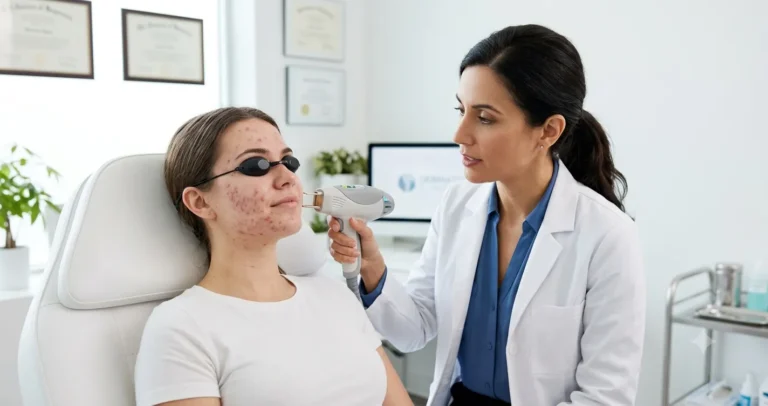
Treatments a professional may recommend
A dermatologist may suggest:
- Prescription-strength retinoids
- Topical antibiotics paired with benzoyl peroxide
- Hormonal treatment options for some women
- Oral medications for moderate to severe acne
- In-office procedures like acne-safe extractions, light peels, or injections for severe inflamed cysts
The best treatment depends on your skin, your acne type, your age, and your overall health. A personalized plan is often the fastest way to stop the cycle.
Stress acne vs other skin problems
Not every bump that appears during a stressful week is acne. Some skin conditions can look similar.
Stress acne vs hormonal acne
Both can overlap, especially around the jawline and chin. Hormonal acne often follows a repeating pattern and may flare around menstrual changes or other hormone shifts. Stress acne is more closely tied to emotional strain, poor sleep, or intense life events.
That said, stress and hormones can affect each other. For many adults, the breakout is not one or the other. It is both.
Stress acne vs folliculitis
Folliculitis is irritation or inflammation around hair follicles. It can look like small acne bumps, but it may be more uniform and may show up after sweating, friction, shaving, or trapped heat.
If bumps are itchy, appear suddenly in clusters, or show up heavily on the chest, back, or scalp after sweating, folliculitis may be worth considering.
Stress acne vs stress rash
A stress rash is not the same thing as acne. Stress rashes are often itchy, blotchy, or hive-like. Acne usually involves clogged pores, whiteheads, blackheads, inflamed pimples, or deeper tender bumps.
If your skin problem is itchy rather than pimple-like, or if it spreads quickly without typical acne features, it may not be acne at all.
Practical daily plan for managing stress and breakouts
When your life is busy, your routine needs to be realistic.
Here is a simple plan you can actually follow:
Morning routine
- Wash with a gentle cleanser
- Apply acne treatment if your product is meant for morning use
- Use a non-comedogenic moisturizer
- Finish with broad-spectrum sunscreen
Evening routine
- Remove makeup and sunscreen fully
- Cleanse gently
- Apply your acne treatment, such as adapalene or salicylic acid, depending on your routine
- Moisturize
Stress-relief habits that are realistic
Choose a few that fit your real life:
- Go for a 10-minute walk
- Put your phone away 30 minutes before bed
- Try slow breathing for 2 minutes
- Stretch your neck and shoulders
- Keep your hands away from your face
- Set a bedtime reminder
- Journal instead of skin picking
Easy checklist for stressful weeks
- Did I sleep enough last night?
- Am I touching or picking my skin?
- Am I overusing products because I feel desperate?
- Did I wash off sweat and makeup?
- Have I kept my routine simple and consistent?
This kind of checklist helps you focus on what actually moves the needle.
Conclusion
Stress and skin are closely linked, and yes, can stress cause acne is a question with a real answer. Stress can trigger breakouts, worsen existing acne, and make your skin harder to manage when sleep, routine, and habits start to slip.
The good news is that stress acne is usually manageable with a gentle routine, the right acne treatments, and a few practical changes that support both your skin and your nervous system. If your breakouts are painful, persistent, or starting to scar, getting professional help can make a big difference.
If your skin tends to flare when life gets hectic, now is a good time to simplify your routine, protect your skin barrier, and pay attention to the patterns your skin keeps trying to show you.
FAQ:
Can stress cause acne even if you never had acne before?
It can, but it is more common for stress to trigger breakouts in people who are already somewhat acne-prone. Stress can increase oil, inflammation, and skin irritation, which may make pimples more likely even if you usually have clear skin.
How long does stress acne last?
A single stress-related breakout may settle within days to a couple of weeks, but ongoing stress acne can last much longer. Most home treatments need at least several weeks of steady use before you can judge whether they are helping.
What are the most common stress acne areas?
Common stress acne areas include the forehead, cheeks, chin, jawline, and sometimes the chest or back. The exact location can vary based on oil production, hormones, sweat, friction, and how often you touch your face.
Does stress give you pimples or just make existing acne worse?
For some people, does stress give you pimples has a yes answer. For others, stress mostly makes existing acne worse. In many cases, stress acts as a trigger that pushes already vulnerable skin into a breakout.
What is the best way to treat stress acne without irritating your skin?
The best approach is usually a simple routine: gentle cleanser, non-comedogenic moisturizer, daily sunscreen, and one acne treatment such as benzoyl peroxide, salicylic acid, or adapalene. Avoid scrubbing, over-cleansing, and using too many actives at once.