Adult Acne Dermatologist: What to Bring and Ask at Your First Visit
Booking an adult acne dermatologist appointment can be a useful next step when breakouts keep returning, leave dark marks or scars, become painful, or simply are not responding to a reasonable over-the-counter routine. The visit is more productive when you arrive with organized information instead of trying to remember months of products, flares, and side effects on the spot.
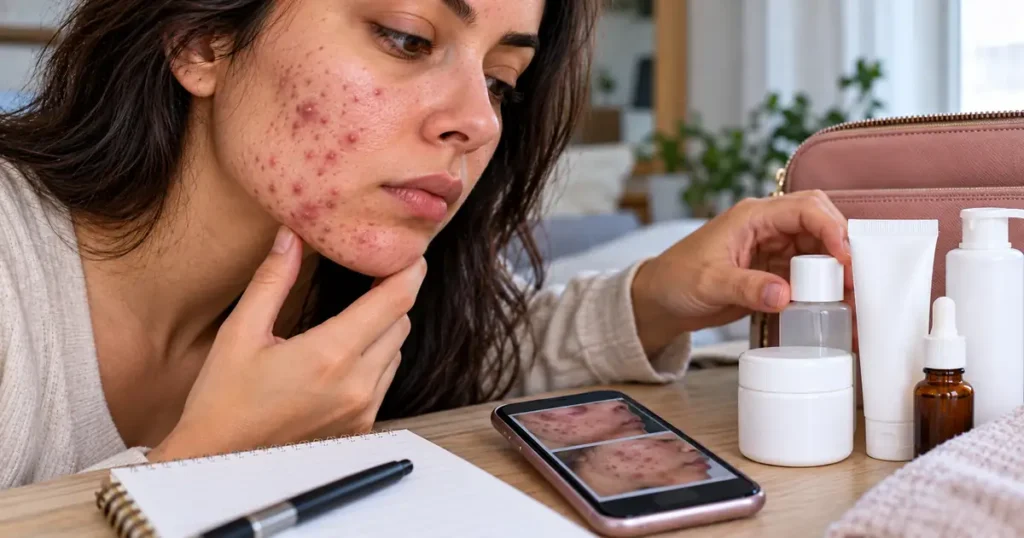
For your first adult acne dermatologist visit, bring a list of medications, vitamins, and supplements; your current skincare routine; a short record of previous acne treatments; useful photos of past flares; and a written list of your main questions. Be ready to explain when the acne started, where it appears, what you have already tried, and whether it leaves dark marks or scars.
Table of Contents
When Should You See an Adult Acne Dermatologist?
You do not need to wait until acne becomes severe before seeing a dermatologist. The American Academy of Dermatology notes that even mild adult acne can benefit from professional evaluation, while deep painful breakouts, scarring, persistent dark marks, or poor response to nonprescription treatment are stronger reasons to seek care.
An adult acne dermatologist visit is especially reasonable when:
- You develop deep, painful nodules or cyst-like breakouts.
- New scars are forming.
- Dark marks continue to accumulate after breakouts heal.
- Several weeks of correctly used over-the-counter treatment have not produced enough improvement.
- Acne suddenly changes in adulthood.
- Breakouts keep returning in the same pattern.
- You are unsure whether the condition is acne or something that looks similar.
- Acne is affecting your confidence or daily life.
Pregnancy or plans to become pregnant are also important to mention because some acne treatments are not appropriate during pregnancy. Do not stop a prescribed medicine on your own because you suspect it contributes to acne; discuss that possibility with the clinician who prescribed it.
Adult Acne Dermatologist: What to Bring to Your First Visit
The best preparation is not a huge folder. It is a short, accurate summary that gives the dermatologist the information needed to understand what has already happened.
Your medication, vitamin, and supplement list
Write down everything you currently take, including:
- Prescription medicines
- Over-the-counter medicines
- Vitamins
- Herbal products
- Sports or beauty supplements
- Hormonal contraception, when relevant
- Current acne medicines
AAD recommends bringing a complete list because medicines and supplements can affect the skin and can also interact with treatments a dermatologist may consider.
If you use several supplements, include the exact product names or clear photos of the labels. Our guide to supplements for acne explains why the full supplement list matters, especially when multiple products contain overlapping nutrients.
Your current skincare routine
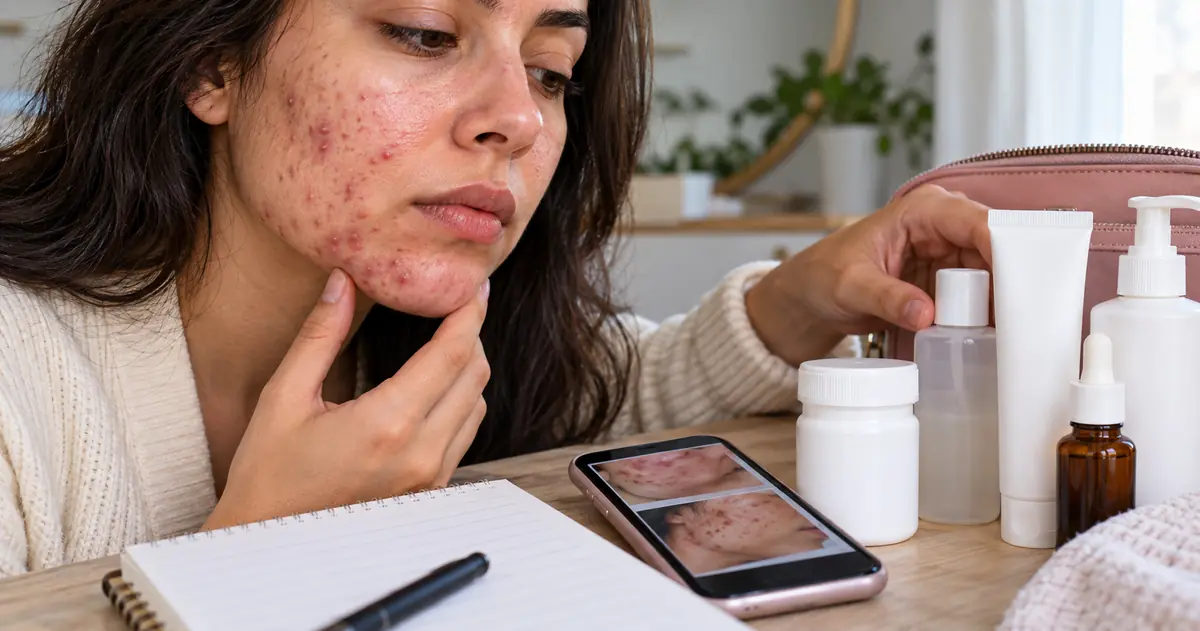
Bring the actual products if that is convenient, or take clear photos of the front labels and ingredient lists. Include:
- Cleanser
- Acne treatment
- Moisturizer
- Sunscreen
- Serums
- Exfoliants
- Makeup you use frequently
- Hair products that regularly touch acne-prone areas
This helps the adult acne dermatologist see whether your routine contains overlapping actives, irritating combinations, or products that may be relevant to the breakout pattern.
AAD also advises arriving with skin that can be examined clearly. If the practice gives specific pre-visit instructions, follow those. Otherwise, avoid covering the acne with heavy makeup immediately before the exam, and bring makeup remover if you need to wear makeup to the appointment.
A record of previous acne treatments
“I tried everything” is understandable, but it is not very useful clinically.
Instead, create a simple list with:
- Treatment or product name
- Active ingredient or prescription name
- Strength, if known
- How often you used it
- Roughly how long you used it
- Whether it helped
- Side effects
- Why you stopped
This can prevent repeating a treatment that already failed because of intolerance, and it helps the dermatologist distinguish a truly ineffective therapy from one that may not have been used long enough or consistently enough to judge. AAD specifically notes that dermatologists commonly ask how long acne has been present and which treatments have already been tried.
Useful photos of previous flares
Your skin may look relatively calm on appointment day even if you had a severe flare two weeks earlier. Clear photos can preserve information that is otherwise easy to lose.
Useful photos may show:
- A typical severe flare
- Breakouts that appear before or during a menstrual cycle
- Chest or back acne that is hard to display quickly
- A sudden change after a new medicine or skincare product
- Acne that later leaves dark marks
- Areas where scarring is developing
Cleveland Clinic recommends symptom diaries and clear photos when they help show a condition over time. Photos support the history; they do not replace an in-person examination.
How to Prepare an Adult Acne Timeline
A short timeline helps the clinician see patterns without asking you to reconstruct years of history under pressure.
Write down:
- Approximate age when acne began
- Whether it continued from adolescence or started in adulthood
- Main areas affected
- Whether breakouts are mostly clogged pores, inflamed pimples, or deep painful bumps
- Whether itching, burning, or another unusual symptom occurs
- Menstrual timing, if relevant
- Pregnancy, postpartum, perimenopause, or menopause changes, if relevant
- Starting or stopping hormonal contraception
- Major medication changes
- New skincare or hair products
- Stress or other changes that clearly line up with flares
Patterns are clues, not a diagnosis. For example, recurring chin and jawline breakouts can occur with hormonal influences, but location alone does not prove a hormonal cause. AAD identifies menstrual cycles, pregnancy, birth-control changes, menopause, stress, medications, and other factors as possible contributors to adult acne.
If lower-face acne is one of your main concerns, our guide to what causes chin acne can help you identify patterns worth documenting before the visit.
Adult Acne Dermatologist: What Happens at the Appointment?
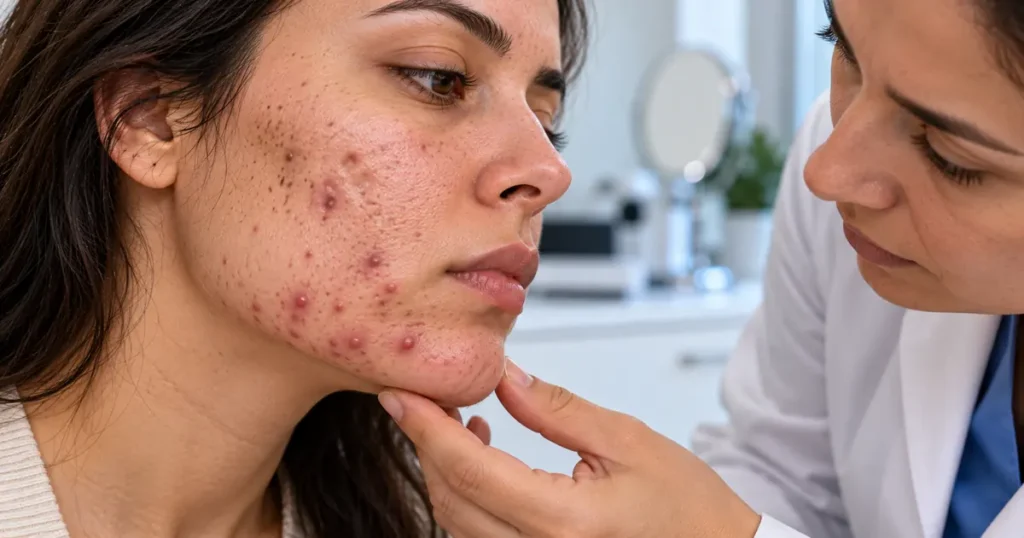
An adult acne dermatologist appointment usually starts with history and examination, not with a prescription selected before you walk in.
The dermatologist may ask when acne started, what treatments you have tried, what medications and supplements you take, whether flares follow a pattern, and what products touch your skin. They will examine the types of breakouts and where they occur because blackheads, whiteheads, inflamed pimples, nodules, scars, and acne-like conditions do not all call for the same approach.
A first visit may include:
- Review of your acne history.
- Review of medications, supplements, and skincare.
- Examination of the face and any other affected areas.
- Assessment of acne type and severity.
- Discussion of dark marks or scarring.
- Review of treatment goals and practical limitations.
- Explanation of treatment options.
- Discussion of side effects and realistic expectations.
- A follow-up plan.
Routine blood tests are not required for every person with acne. Testing depends on the clinical situation and the treatment being considered. Do not assume that an adult acne dermatologist can or should order hormone panels for every case of jawline acne.
Some specific treatments do have monitoring requirements. For example, AAD describes additional evaluation and testing for patients being considered for certain hormonal treatments or isotretinoin.
What to Tell the Dermatologist About Hormonal Patterns
Hormonal changes can matter in adult acne, particularly around menstrual cycles, pregnancy, postpartum changes, starting or stopping birth control, and perimenopause or menopause. Some medications and medical conditions can also influence acne.
Tell the dermatologist if you notice:
- Breakouts that predictably flare around your period
- A major change after starting or stopping contraception
- Acne beginning during pregnancy or postpartum
- New adult acne around perimenopause or menopause
- Persistent lower-face breakouts
- Other new symptoms or health changes
- A medicine change that occurred before acne worsened
Do not diagnose yourself from one pattern alone. A jawline breakout can be consistent with hormonal influence, but it can also occur for other reasons.
If hormonal treatment is being considered, the adult acne dermatologist may need a more detailed medical history because some therapies have important contraindications, monitoring needs, or pregnancy considerations.
Discussing Acne Scars and Dark Marks at the Same Visit
Tell the dermatologist explicitly if your concern is not only active acne.
Point out whether you are dealing with:
- Flat brown or gray marks
- Flat red or pink marks
- Indented scars
- Raised scars
- New scars forming after deep acne
These problems are not interchangeable. Flat post-acne discoloration may require a different strategy from a structural scar.
If new scars are still forming, controlling active acne often becomes the priority because treating old scars while new ones continue to appear can work against the long-term goal. AAD emphasizes early acne control to help prevent additional scarring.
For a deeper explanation, see how dermatologists assess acne scars.
Adult Acne Dermatologist: Questions to Ask Before You Leave
A good visit should end with a plan you understand.
Ask questions such as:
- What type or types of acne do I have?
- Could any part of my current routine be worsening irritation or breakouts?
- What is the main goal of the treatment you are recommending?
- How should I use each treatment?
- Which side effects are expected?
- Which symptoms should make me contact the office?
- How long should I follow this plan before judging the result?
- What should I do if irritation becomes significant?
- Are there products or medicines I should avoid combining with this treatment?
- When should I come back?
Mayo Clinic recommends asking about the treatment approach, possible side effects, how long medication can be used, when improvement might begin, what to do if treatment does not work, and when follow-up should happen.
If you leave the adult acne dermatologist visit unsure how to use the treatment, ask for the instructions again in plain language. A plan is only useful if you understand how to follow it.
Questions to Ask About Prescription Acne Treatment
If a prescription is being discussed, make the questions more specific.
Ask:
- What problem is this medicine targeting?
- How and when should I use it?
- Should it be applied to the whole acne-prone area or only visible spots?
- What irritation is common early on?
- Are there important drug or skincare interactions?
- Are there pregnancy or breastfeeding restrictions that apply to me?
- Does this treatment require laboratory monitoring?
- How will we decide whether to continue, adjust, or replace it?
Do not guess about stopping a prescription if you do not see immediate results. Acne treatment often takes time, and some medicines have specific safety rules. Follow the instructions given for the treatment you actually receive.
Questions About Cost, Insurance, and Follow-Up
Commercial intent matters here because the best treatment plan is not useful if you do not understand how follow-up or coverage works.
Before or during the visit, ask:
- Is this dermatologist in my insurance network?
- Is the initial visit covered?
- Will a prescription need prior authorization?
- Are follow-up appointments billed separately?
- When should the first follow-up happen?
- Is telehealth available for appropriate follow-up visits?
- Are acne-scar procedures separate from medical acne treatment?
- Which services are considered cosmetic?
AAD recommends checking network and coverage details directly with your insurer. It also notes that cosmetic procedures are often not covered.
Avoid relying on a national “average dermatologist price” when planning the visit. Cost varies by region, insurance plan, practice, service, and whether the care is considered medical or cosmetic.
How to Choose an Adult Acne Dermatologist Near You
If you are still deciding where to book, look beyond the nearest map result.
Useful checks include:
- Board certification
- Experience treating adult acne
- Experience with your skin tone, when relevant
- Insurance/network status
- Appointment availability
- Clear follow-up process
- Telehealth options where appropriate
- Whether the practice treats active acne and acne scarring or refers procedures elsewhere
AAD recommends looking for a board-certified dermatologist and provides a U.S. Find a Dermatologist directory. Insurance status should still be confirmed directly with the insurer and practice.
The right adult acne dermatologist does not have to promise a dramatic result at the first visit. A better sign is a clinician who identifies what type of acne is present, explains why a treatment fits, discusses side effects and alternatives, and gives you a realistic follow-up plan.
The One-Page Adult Acne Dermatologist Appointment Checklist
Before the appointment, prepare one page or one note on your phone.
Bring or document
- Current medications
- Vitamins and supplements
- Current skincare products
- Previous acne treatments
- Useful breakout photos
- Relevant medical history
- Previous laboratory results if the practice requested them or if they are relevant
Write down
- When acne began
- Where it usually appears
- Whether it follows a pattern
- Which treatments you have already tried
- Which treatments caused side effects
- Whether you develop dark marks or scars
- Your main treatment goal
- Your three most important questions
Before you leave the visit, make sure you know
- What the diagnosis or working assessment is
- What each treatment is supposed to do
- How to use it
- Which side effects matter
- What to do if irritation occurs
- When improvement can reasonably be assessed
- When follow-up should happen
That one-page summary can make an adult acne dermatologist visit much easier to navigate than trying to remember every product and flare in real time.
Frequently Asked Questions
Should I stop using skincare before seeing an adult acne dermatologist?
Do not independently stop prescription acne treatment just because an appointment is coming up. Follow any instructions from the dermatology office. For the examination itself, the dermatologist needs to see your skin clearly, so avoid covering the acne with heavy makeup immediately beforehand or be prepared to remove it at the office.
Should I bring my skincare products to the dermatologist?
Yes, if practical. You can bring the actual bottles or clear photos of the product names, active ingredients, strengths, and ingredient lists. This helps the dermatologist see what you currently use and identify duplicated actives, irritation risks, or products that may be relevant to the breakout pattern.
Can a dermatologist tell if my adult acne is hormonal?
An adult acne dermatologist can use your history, breakout pattern, menstrual or reproductive history, medications, and other symptoms to judge whether hormonal influences may be relevant. Jawline or chin location alone does not prove a hormonal cause, and laboratory testing is not automatically required for every adult with acne.
Should I discuss acne scars during my first acne appointment?
Yes. Mention scars and dark marks if they matter to you, especially if new scars are still forming. The dermatologist may prioritize controlling active acne before cosmetic scar procedures because preventing additional scars can be more important than treating old ones immediately.
How soon should I follow up after my first acne consultation?
There is no single follow-up interval for every treatment. It depends on the medicine, acne severity, side effects, monitoring needs, and treatment goals. Before leaving, ask when the dermatologist wants to reassess the plan and what should prompt you to contact the office sooner.
Conclusion
Preparing for an adult acne dermatologist visit is mostly about organizing useful information. Bring your medication and supplement list, document the products and treatments you have already tried, save photos of representative flares, and write down the questions you do not want to forget.
The goal is to leave with more than a prescription name. You should understand what type of acne is being treated, what each part of the plan is meant to do, how to use it, what side effects to watch for, and when follow-up should happen.
If you have not booked yet, choose a board-certified dermatologist whose practice fits your needs and insurance situation. If the appointment is already scheduled, spend a few minutes preparing the one-page checklist above so the consultation can focus on decisions rather than reconstructing your history.
This article is for educational purposes only and is not a diagnosis or a substitute for individualized care from a qualified healthcare professional.
References:
- American Academy of Dermatology — Adult acne treatment dermatologists recommend
- American Academy of Dermatology — How to select a dermatologist
- American Academy of Dermatology — Adult acne: Why it happens and what you can do for it
- American Academy of Dermatology — Find a Dermatologist
- Mayo Clinic — Acne: Diagnosis and treatment
- Cleveland Clinic — What is a dermatologist and how should you prepare for your first appointment?